🔥 Flat 10% OFF on First Order | Premium Wooden Furniture | Free Shipping

Charcoal Infused Mattress: Does It Really Cool You Down?

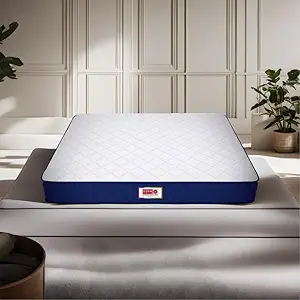
Charcoal infused mattresses do help manage heat compared to plain foam, because activated charcoal particles increase airflow within the foam’s open-cell structure and help absorb moisture and odour, but the cooling effect is moderate, not dramatic — it works best combined with a breathable cover and natural materials like latex, rather than as a stand-alone cooling solution. Buyers expecting an air-conditioner-like temperature drop will be disappointed; buyers expecting a noticeably less sweaty, fresher-smelling sleep surface than a standard closed-cell foam mattress will generally be satisfied.
Charcoal infusion has become a common feature in orthopedic mattresses marketed across India, especially for buyers in hot, humid regions. This guide explains the actual mechanism behind charcoal-infused foam, what it can and can’t do, and how it performs in a natural latex construction like the Flo Anti-Gravity Charcoal Latex Mattress.
Table of Contents
- What Is Charcoal Infused Foam?
- At a Glance: Does Charcoal Infusion Actually Cool You Down?
- The Science Behind Activated Charcoal in Mattresses
- Charcoal vs Gel Infusion vs Open-Cell Foam for Cooling
- Odour Control: The Other Half of the Charcoal Claim
- Why Cooling Matters More in Indian Bedrooms
- Charcoal Infused Latex vs Charcoal Infused Memory Foam
- Setting Realistic Expectations
- How to Maximize the Cooling Effect at Home
- Maintenance for Charcoal Infused Mattresses
- Frequently Asked Questions
- Conclusion
What Is Charcoal Infused Foam?
Charcoal infused foam is created by blending activated charcoal particles, usually derived from bamboo or coconut shell carbon, directly into the foam during manufacturing, or by treating the foam layer with a charcoal-infused coating. Activated charcoal has an extremely porous surface structure, which is why it’s used in water filters and air purifiers — that same porous structure, embedded into mattress foam, is intended to help wick moisture and improve airflow through the foam’s cell structure while also absorbing odour-causing compounds.
At a Glance: Does Charcoal Infusion Actually Cool You Down?
| Claim | Reality |
|---|---|
| “Charcoal keeps you cool like AC” | False. Effect is moderate heat/moisture management, not active cooling |
| Improves airflow within foam | True. Charcoal’s porous structure aids ventilation within the foam cells |
| Reduces odour buildup | True. Activated charcoal is a genuine odour absorber |
| Works best alone in dense memory foam | Partially true. Works better combined with latex or open-cell structures |
| Replaces need for breathable cover | False. Cover material still matters significantly for overall heat management |
The Science Behind Activated Charcoal in Mattresses
Activated charcoal is processed to have an enormous internal surface area per gram, riddled with microscopic pores. This structure is genuinely effective at adsorbing (binding to its surface) moisture vapour, volatile organic compounds, and odour molecules, which is well documented in air and water filtration use. When embedded into mattress foam, the same porous particles create tiny additional air channels through the foam matrix and help pull moisture away from the surface where body heat and perspiration would otherwise build up against the skin overnight.
What charcoal infusion does not do is actively lower temperature. It has no refrigerant or phase-change cooling property; it’s a passive material that assists airflow and moisture management rather than actively removing heat the way a gel pack or air conditioning does.
Why the “Cooling” Marketing Term Can Be Misleading
Many mattress listings use “cooling” as a broad marketing term covering any material that manages heat better than dense closed-cell foam. Charcoal infusion genuinely improves on plain memory foam in this regard, but it should be understood as heat and moisture management, not refrigeration. Buyers who understand this distinction tend to be more satisfied with the actual results than those expecting a dramatic temperature difference.
Charcoal vs Gel Infusion vs Open-Cell Foam for Cooling
Gel infusion works differently — gel beads or gel-swirl layers absorb heat and distribute it more evenly across the foam surface, which can feel cooler to the touch initially but doesn’t necessarily improve long-term airflow through the mattress. Open-cell foam structure, independent of any infusion, is often the single biggest factor in a foam mattress’s breathability, since larger, more connected air pockets simply let more air move through the material regardless of any added particles. The most effective cooling designs typically combine an open-cell or naturally breathable base material (like latex) with an infusion (charcoal or gel) and a moisture-wicking cover fabric, rather than relying on any single feature alone.
Odour Control: The Other Half of the Charcoal Claim
Odour absorption is arguably the more consistently effective claim behind charcoal infusion. Over months of use, mattresses absorb sweat, skin oils, and general body odour, and activated charcoal’s adsorptive properties help reduce the buildup of these odour compounds within the foam compared to untreated foam. This is a genuine, well-supported benefit independent of the cooling claim, and it’s part of why charcoal infused foam is often marketed alongside “freshness” or “anti-odour” language rather than purely temperature-related claims.
Why Cooling Matters More in Indian Bedrooms
Most of India experiences extended periods of high ambient temperature and humidity, often without air conditioning running throughout the night in every household. In these conditions, any mattress feature that reduces heat retention and manages moisture has a genuinely noticeable practical impact on sleep comfort, compared to temperate climates where heat retention in foam is a smaller factor. This is why charcoal infusion, gel infusion, and open-cell natural materials like latex are marketed heavily in the Indian mattress market specifically, more so than in cooler-climate markets.
Charcoal Infused Latex vs Charcoal Infused Memory Foam
Charcoal infusion added to memory foam offers a modest airflow improvement over plain memory foam, but memory foam’s inherently dense, slow-recovering structure still limits how much heat it can dissipate compared to naturally open-cell materials. Charcoal infusion added to natural latex compounds the benefit, since latex is already more breathable than memory foam on its own; adding charcoal’s moisture-wicking and odour-absorbing properties on top of latex’s natural airflow generally produces a noticeably cooler-sleeping mattress than charcoal infused memory foam alone.
ShapeShield and Similar Support Technologies
Some charcoal infused mattresses pair the cooling technology with a separate support technology — often branded terms describing reinforced core structuring designed to prevent sagging under sustained pressure, particularly at the hips and shoulders. These are generally independent of the cooling function; one manages temperature and moisture, the other manages structural support and longevity, and a well-built mattress will typically combine both rather than relying on either alone.
Setting Realistic Expectations
A charcoal infused mattress is a genuine upgrade over a plain, closed-cell memory foam mattress for heat and moisture management, particularly when combined with a breathable base material like latex and a moisture-wicking cover. It is not a substitute for basic room ventilation, a fan, or air conditioning during the hottest months, and it will not make an already poorly ventilated bedroom feel cold. Buyers should treat charcoal infusion as one part of a broader heat-management strategy, not a stand-alone fix.
How to Maximize the Cooling Effect at Home
To get the most from a charcoal infused mattress, use breathable cotton or linen bedsheets rather than synthetic fabrics that trap heat, ensure the bed frame or base allows airflow underneath the mattress rather than sitting on a solid, sealed platform, keep the bedroom ventilated with a fan or cross-breeze where possible, and avoid covering the mattress with a thick, non-breathable waterproof protector that can undo much of the airflow benefit the mattress itself is designed to provide.
Maintenance for Charcoal Infused Mattresses
Charcoal infused mattresses need similar care to other foam or latex mattresses: rotate periodically to distribute wear, use a breathable, moisture-managing mattress protector rather than a fully sealed plastic-backed one, air out the mattress occasionally by leaving bedding off and allowing the room to ventilate, and avoid prolonged direct sunlight on exposed foam or latex, which can degrade the material’s structure over time regardless of any infused technology.
Frequently Asked Questions
Does a charcoal infused mattress actually feel cooler?
It feels moderately cooler than plain closed-cell memory foam because charcoal improves airflow and moisture management within the foam, but it does not actively cool the surface the way air conditioning does.
Is charcoal infusion better than gel infusion for cooling?
Neither is clearly superior on its own; gel distributes heat more evenly across the surface, while charcoal improves airflow and adds odour control. The base material (foam vs latex) generally has a bigger impact on cooling than the infusion type alone.
Does charcoal infused foam reduce mattress odour?
Yes. Activated charcoal has genuine adsorptive properties that help reduce the buildup of sweat and odour-causing compounds within the foam over time, more consistently than its cooling effect.
Is charcoal infused latex cooler than charcoal infused memory foam?
Yes, generally. Latex is naturally more breathable than memory foam, so adding charcoal infusion to latex compounds the airflow benefit rather than fighting against a naturally dense, slow-recovering material.
Can a charcoal infused mattress replace air conditioning in summer?
No. Charcoal infusion assists with heat and moisture management within the mattress itself but cannot replace room ventilation, fans, or air conditioning during genuinely hot conditions.
Does a mattress protector reduce the cooling benefits of charcoal infused foam?
A thick, fully sealed, non-breathable protector can reduce the airflow benefit. A breathable, moisture-wicking protector preserves most of the cooling and moisture-management effect.
How long does charcoal infusion last in a mattress?
Charcoal infusion is embedded into the foam or latex structure during manufacturing and generally lasts the practical lifespan of the mattress itself, since it isn’t a surface coating that wears off with use.
Conclusion
Charcoal infusion is a genuine, moderate upgrade for heat and odour management, especially when paired with a naturally breathable material like latex rather than dense memory foam alone. It is best understood as one part of a broader cooling strategy that includes breathable bedding and good room ventilation, not a stand-alone solution to Indian summer heat. The Flo Anti-Gravity Charcoal Latex Mattress combines charcoal infusion with 100% natural latex and ShapeShield support technology, aligning with the combined-approach recommendation covered here. For a deeper look at natural latex specifically, see our Natural Latex Mattress Benefits guide, and for more on how different cooling materials compare, our guide to cooling mattress materials in Indian summers covers aloe vera, gel and breathable foam options as well.
Charcoal Infusion and Firmness: Does It Change How the Mattress Feels?
Charcoal infusion itself does not meaningfully change the firmness or feel of the base material. A medium-firm latex mattress with charcoal infusion will still feel like medium-firm latex — slightly bouncy, responsive, and supportive — with the added benefit of improved airflow and moisture management. Buyers sometimes assume infused materials will feel noticeably different underfoot, but the firmness and contouring characteristics come almost entirely from the base foam or latex construction, not from the charcoal particles themselves. This is worth knowing when comparing two mattresses of similar construction where one has charcoal infusion and one doesn’t; the primary difference you should expect is in temperature and odour management over time, not in day-one comfort or support.
Does Charcoal Infusion Affect Mattress Price Significantly?
Charcoal infusion typically adds a modest premium over an equivalent non-infused mattress, since it requires additional processing during manufacturing to blend the charcoal particles evenly through the foam or latex. This premium is usually smaller than the price difference between material types themselves (for example, natural latex versus memory foam), so the infusion is rarely the deciding cost factor when comparing mattresses; the base material and construction quality matter more for overall price.
Testing Whether a Mattress Sleeps Cool Before and After Purchase
If possible, check a mattress in person and place a palm flat on the surface for 30-60 seconds; a more breathable material will not retain noticeable body heat in that time, while a dense, poorly ventilated foam will feel warmer to the touch after contact. After purchase, the more reliable test is sleeping on it through a full hot night without a fan or AC and comparing how the surface feels compared to your previous mattress under the same room conditions. Most retailers offering trial periods allow this kind of real-world comparison, which is a more accurate gauge than any single in-store touch test.