
Do Cooling Mattress Materials Actually Work in Indian Summers? Aloe Vera, Gel and Breathable Foam Explained

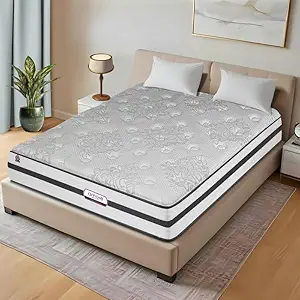
Cooling mattress materials such as gel infusion, aloe vera-treated foam, and breathable open-cell structures do genuinely reduce heat buildup compared to plain memory foam, but they work by improving heat dissipation and moisture management, not by making the mattress cold to the touch. Understanding this distinction is the difference between realistic expectations and disappointment in Indian summers, when room temperatures regularly exceed 35 degrees Celsius for weeks at a time. The Flo Ergo Aloe Vera Memory Foam King Mattress uses aloe vera-infused foam combined with its Motion Isolation Technology specifically to address both temperature regulation and the pressure relief that memory foam is known for, without the excessive heat retention that gave older memory foam mattresses a bad reputation in hot climates.
Table of Contents
- Why Memory Foam Traditionally Sleeps Hot
- Quick Comparison: Cooling Technologies in Mattresses
- What Aloe Vera Infusion Actually Does
- Gel Infusion vs Aloe Vera vs Open-Cell Foam
- Motion Isolation and Cooling: Can You Have Both
- What Actually Matters More Than the Mattress in Indian Summers
- Separating Real Cooling Claims from Marketing
- Buying Checklist for a Cooler-Sleeping Mattress
- Maintenance Tips to Preserve Cooling Performance
- FAQs
- Conclusion
Quick Comparison: Cooling Technologies in Mattresses
| Technology | How It Works | Cooling Effectiveness | Motion Isolation | Typical Price Premium |
|---|---|---|---|---|
| Aloe Vera Infused Foam | Moisture-wicking treatment plus breathable open-cell structure | Moderate to Good | Excellent | Low to Moderate |
| Gel Infusion | Increases thermal mass, absorbs and redistributes heat | Good | Excellent | Moderate |
| Open-Cell / Ventilated Foam | Physical air channels allow heat to escape | Good | Very Good | Moderate |
| Pocket Spring Core (Hybrid) | Airflow through coil layer beneath foam | Excellent | Good | Moderate to High |
| Plain Memory Foam (no treatment) | None specific | Poor | Very Good | None |
Why Memory Foam Traditionally Sleeps Hot
Memory foam’s viscoelastic structure, the same property that gives it excellent motion isolation and pressure relief, is a closed or semi-closed cell foam that conforms tightly to the body. This close contact reduces airflow around the sleeper compared to a springier surface, and the material itself has a slower thermal response, meaning body heat builds up in the foam layer before it can dissipate. This is a well-documented and genuine drawback of first-generation memory foam, which is exactly why the mattress industry has spent the last decade developing infusions and structural changes specifically to counteract it.
What Aloe Vera Infusion Actually Does
Aloe vera extract is incorporated into the foam during manufacturing, and its practical benefit in a mattress context is twofold: it has natural moisture-regulating properties that help manage the humidity that builds up between skin and foam surface during sleep, and it is commonly paired with an open-cell foam structure that physically allows more air movement through the foam matrix than a standard closed-cell memory foam. It is worth being precise here: aloe vera itself does not chemically “cool” anything in a thermodynamic sense, its functional contribution is moisture and odor management, while the actual heat dissipation comes primarily from the accompanying open-cell foam engineering. Brands that combine both elements, as opposed to only adding a fragrance-level aloe vera coating, produce a genuinely more breathable sleep surface.
Gel Infusion vs Aloe Vera vs Open-Cell Foam
Gel infusion works differently from aloe vera treatment. Gel particles or a gel layer increase the foam’s thermal mass, meaning the material can absorb more heat before its own temperature rises noticeably, and well-designed gel foams also redistribute that absorbed heat sideways rather than letting it concentrate directly under the body. Open-cell or ventilated foam takes a purely structural approach, physically engineering larger, more connected air pockets within the foam so warm, humid air can escape upward and be replaced by cooler air. In practice, the best-performing modern mattresses combine two or more of these approaches rather than relying on a single technology, which is why checking the specific construction details matters more than a single marketing term on the box.
Motion Isolation and Cooling: Can You Have Both
This is often presented as a trade-off, and there is some truth to it: the most breathable constructions (pocket springs with a thin foam layer) generally isolate motion slightly less well than dense, all-foam constructions. However, treated memory foams like aloe vera-infused, open-cell foam substantially narrow this gap. You do not get the airflow of an all-spring mattress, but you retain the vast majority of memory foam’s motion isolation while meaningfully reducing the heat retention that made older memory foam mattresses uncomfortable for many Indian households. If cooling is your only concern and motion isolation does not matter to you, a hybrid or pocket spring mattress will still outperform any foam mattress on pure temperature regulation.
What Actually Matters More Than the Mattress in Indian Summers
No mattress technology fully substitutes for basic bedroom ventilation and appropriate bedding. Cotton or linen bedsheets breathe significantly better than synthetic blends and have a measurable impact on how hot a mattress feels regardless of its internal cooling technology. A ceiling fan directly above the bed, or air conditioning run for at least part of the night during peak summer months, addresses ambient room heat that no mattress material can offset on its own. A breathable, non-plastic mattress protector also matters, a vinyl or fully waterproof protector traps heat and moisture against the mattress surface and can undo much of the benefit of an aloe vera or gel-infused comfort layer. Buyers who expect a cooling mattress alone to solve a genuinely hot, poorly ventilated bedroom will likely be disappointed regardless of which brand or technology they choose.
Separating Real Cooling Claims from Marketing
Look for specifics rather than adjectives. A listing that says “infused with aloe vera extract and open-cell ventilated foam structure” is describing an actual construction choice you can evaluate. A listing that only says “cooling gel comfort” without describing the underlying foam structure is giving you less useful information. It is reasonable to ask a seller directly whether the aloe vera treatment is infused into the foam itself (long-lasting) or applied only to the outer fabric cover (temporary, washes out over repeated laundering), since this materially affects how long the benefit lasts.
Buying Checklist for a Cooler-Sleeping Mattress
- Confirm whether the cooling treatment is infused into the foam or only applied to the cover fabric.
- Check for open-cell or ventilated foam structure described explicitly in the product specifications.
- Look for a breathable, moisture-wicking quilted cover, ideally certified (such as OEKO-TEX) for both breathability and safety.
- Consider your existing bedroom ventilation honestly, a cooling mattress in an unventilated room will still feel warm.
- If cooling is your absolute top priority over motion isolation, compare against a pocket spring hybrid as well before deciding.
Maintenance Tips to Preserve Cooling Performance
Use a breathable, quilted mattress protector rather than a plastic or vinyl-backed one, since trapped moisture reduces the effectiveness of any open-cell or gel cooling structure over time. Air out the mattress periodically, particularly after monsoon season, by removing bedding and allowing the surface to fully dry, since humidity absorbed into the foam reduces its ability to dissipate heat efficiently. Wash removable covers according to label instructions, since body oils and dust accumulation over time can reduce the breathability of the fabric layer that works alongside the foam’s internal cooling technology. Avoid placing the mattress directly against a solid, non-ventilated platform base, a slatted base allows continued airflow from below, which meaningfully supports whatever cooling technology is built into the mattress itself.
Frequently Asked Questions
Does aloe vera in a mattress actually make it feel cooler?
Aloe vera itself primarily contributes moisture management and a naturally soothing surface feel, while the cooling effect mostly comes from the open-cell foam structure it is typically paired with, so the combination genuinely helps, but aloe vera alone is not a cooling agent in the thermal sense.
Is gel memory foam cooler than aloe vera infused memory foam?
They address heat differently, gel increases thermal mass and redistributes heat, while aloe vera-treated open-cell foam focuses on moisture management and airflow, both can perform similarly well depending on the specific foam structure each is paired with.
Will a cooling mattress feel cold to sleep on?
No, cooling mattress technologies reduce heat buildup and improve breathability, they do not make the surface feel cold to the touch the way a gel ice pack would, the benefit is noticed over hours of use rather than immediately on contact.
Do cooling mattresses work without air conditioning in Indian summers?
They help meaningfully but are not a complete substitute for basic bedroom ventilation, pairing a cooling mattress with a ceiling fan, breathable cotton bedsheets, and a non-plastic mattress protector produces the best real-world results.
Does motion isolation suffer on a cooling memory foam mattress?
Modern aloe vera and gel-infused open-cell foams retain the large majority of memory foam’s motion isolation performance, the trade-off compared to plain memory foam is minor, and both still significantly outperform spring mattresses on this specific metric.
How long does the cooling effect of infused foam last?
If the treatment is infused into the foam itself rather than only applied to the fabric cover, the cooling benefit lasts the functional life of the mattress, typically 8 to 10 years, since it is part of the material structure rather than a surface coating that wears off.
What mattress cover fabric works best with a cooling foam mattress?
Breathable, moisture-wicking fabrics such as certified cotton blends or specifically engineered ventilated knit fabrics complement cooling foam technologies best, avoid fully synthetic, non-breathable covers, which trap heat regardless of what is happening in the foam layer beneath.
Conclusion
Cooling mattress technology is a genuine engineering improvement over older memory foam, not a marketing gimmick, but it works through moisture management and improved airflow rather than making the mattress cold to the touch, and it performs best alongside sensible bedroom ventilation. The Flo Ergo Aloe Vera Memory Foam King Mattress combines aloe vera-infused foam with Motion Isolation Technology to balance temperature regulation with the pressure relief and undisturbed sleep memory foam is known for. For related buying decisions, see our guides on memory foam density and firmness and coir vs memory foam for back pain. For further independent reading on mattress temperature regulation, see the Sleep Foundation’s guide to the best cooling mattresses.
How Regional Climate Differences Across India Affect the Decision
Coastal cities such as Mumbai, Chennai, and Kochi combine high temperature with persistently high humidity, which is the most demanding combination for any foam mattress, since humid air slows heat dissipation from the body regardless of the foam’s internal cooling technology. In these regions, breathable, moisture-wicking covers and open-cell foam structures matter more than almost anywhere else in the country. Drier heat regions such as Delhi, Jaipur, and much of central India experience very high daytime temperatures but lower humidity, where a cooling mattress paired with a fan performs noticeably better than the same setup in a humid coastal city, since dry air allows moisture and heat to evaporate away from the sleep surface more efficiently. Hill and northern regions with cooler year-round climates see the least practical benefit from cooling-specific foam technology, and buyers there can reasonably prioritize other factors such as firmness or motion isolation over cooling performance.
Signs a Foam Mattress Is Overheating and What to Do About It
Waking up drenched in sweat even in an air-conditioned room, needing to flip your pillow repeatedly through the night to find a cooler side, or noticing the mattress surface feels distinctly warm to the touch when you get up in the morning are all signs the mattress itself is contributing meaningfully to your heat discomfort rather than the room alone. If you experience this on a plain, untreated memory foam mattress, switching to an aloe vera or gel-infused open-cell foam construction typically produces a noticeable improvement within the first few nights, since the underlying cause is the foam’s heat retention rather than something that requires an entirely different mattress category such as spring or coir.
One more practical point worth noting: the color and material of your bedsheets and mattress protector affects perceived heat almost as much as the mattress construction itself, darker and synthetic fabrics absorb and retain more heat than light-colored, natural fiber alternatives, so pairing a cooling mattress with the wrong bedding can meaningfully undercut its benefit.