
Best Mattress for Heavy Body Types in India: Support, Durability and Foam Density Guide

Quick Answer: The best mattress for heavy body types should have a denser, thicker support core to prevent premature sagging and ensure proper spinal support. High-resilience (HR) foam is ideal as it resists faster compression. A mattress with the right foam density and support layer thickness is crucial for heavier sleepers.
- HR foam offers better support and durability.
- Foam density is key for longevity, not just firmness.
- Thicker support layers prevent “bottoming out”.
- Firmness should balance with sleeping position.
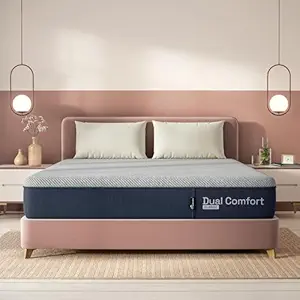
Heavier sleepers need a mattress with a denser, thicker support core than an average-weight sleeper, because standard foam and coil constructions are engineered around a average body weight assumption and compress far faster under 90kg or higher body weight, leading to premature sagging, poor spinal support, and heat buildup. The fix is not simply “buy a firmer mattress,” it is buying one with the right foam density and support layer thickness for your actual weight range. The Kurl-On Orthopedic HR Foam Memory Foam King Mattress is built around exactly this requirement, combining high-resilience (HR) foam as the support base with a memory foam comfort layer, a combination that specifically resists the faster compression heavier bodies cause in standard foam mattresses.
Table of Contents
- Why Standard Mattresses Fail Heavier Body Types Faster
- Quick Comparison: Mattress Options by Body Weight Range
- What Is HR Foam and Why It Matters for Heavier Sleepers
- Foam Density Explained in Plain Terms
- Support Layer Thickness: How Much Is Enough
- Firmness Level for Heavier Body Types
- Durability and Indian Climate Considerations
- Buying Checklist for Heavier Sleepers
- Maintenance to Extend Mattress Life Under Higher Loads
- FAQs
- Conclusion
Quick Comparison: Mattress Options by Body Weight Range
| Body Weight Range | Recommended Foam Density | Recommended Support Layer | Firmness Feel | Mattress Height |
|---|---|---|---|---|
| Up to 70kg | 24-28 kg/m3 | Standard PU or memory foam | Medium to Medium-Firm | 5-6 inches |
| 70-100kg | 32 kg/m3 or higher | HR foam base + memory foam comfort layer | Medium-Firm to Firm | 6-8 inches |
| 100kg+ | 40 kg/m3 or higher | HR foam base, thicker pocket springs, or reinforced hybrid | Firm | 8 inches or more |
Why Standard Mattresses Fail Heavier Body Types Faster
Foam and coil manufacturers design comfort layers around an assumed pressure range, since a lighter body distributes less force per square inch onto the foam cells or coil wires. When a heavier body applies more sustained pressure, especially concentrated at the hips and shoulders during side or back sleeping, low-density foam compresses further and recovers more slowly with every use cycle, which accelerates the permanent body impression that eventually becomes a visible dip. The same physics applies to spring mattresses using thin-gauge wire, thinner coils flex and fatigue faster under sustained higher loads. This is why a mattress that performs perfectly well for a 60kg sleeper can develop a noticeable sag within a year under a 100kg sleeper, even though nothing about the manufacturing was defective, it was simply not specified for that load range.
What Is HR Foam and Why It Matters for Heavier Sleepers
High-resilience (HR) foam is manufactured with a different polymer and curing process than standard PU foam, resulting in a more open, more elastic cell structure that recovers its shape faster and more completely after compression. In practical terms, HR foam supports higher loads without bottoming out, meaning the sleeper does not sink through the comfort layer and feel the harder base beneath it, a common complaint from heavier sleepers on budget all-foam mattresses. HR foam is also more resistant to long-term fatigue than standard foam of the same thickness, so it holds its supportive shape for a longer number of years under consistent higher-weight use.
Foam Density Explained in Plain Terms
Foam density, measured in kg per cubic metre, indicates how much actual foam material is packed into a given volume, and it is the single most reliable indicator of durability, not firmness. A higher density foam is not necessarily firmer to the touch, firmness is a separate specification (often called ILD or indentation load deflection), but higher density foam almost always lasts longer under sustained weight because there is simply more material resisting compression fatigue over time. For a heavier sleeper, prioritizing density over the advertised firmness label is the more reliable way to predict how the mattress will perform after two or three years of nightly use, since a mattress that feels right on day one but uses low-density foam will soften and sag noticeably faster under higher body weight.
Support Layer Thickness: How Much Is Enough
The support or base layer is what prevents “bottoming out,” the sensation of sinking all the way through the comfort layer to a hard, unsupportive base. For sleepers over roughly 90-100kg, a base layer of at least 5-6 inches of HR foam or an equivalent pocket spring depth is generally necessary to maintain proper support, compared to 3-4 inches being sufficient for lighter sleepers. This is why total mattress height matters more for heavier body types than it does for others, a 6-inch mattress that works fine for a 60kg sleeper may not provide adequate support depth for a 110kg sleeper, regardless of how firm the top layer feels initially.
Firmness Level for Heavier Body Types
Heavier sleepers generally need a firmer overall feel than lighter sleepers to prevent excessive sinkage, but firmness needs to be balanced against sleeping position. A heavier back sleeper usually needs a firm to extra-firm surface to keep the spine level. A heavier side sleeper still needs enough give at the shoulder and hip to avoid pressure points, which is exactly why a layered construction, firm HR foam support with a moderate memory foam comfort layer on top, tends to outperform a single-density firm slab for heavier side sleepers specifically.
Durability and Indian Climate Considerations
Higher humidity accelerates foam degradation generally, and this effect compounds with higher sustained loads, since compressed foam cells trap moisture more readily than foam that is regularly allowed to fully decompress. For heavier sleepers in humid regions of India (coastal cities, monsoon-heavy states), a breathable quilted cover and a slatted or well-ventilated bed base are not optional extras, they meaningfully extend the usable life of the support foam by reducing moisture retention within the denser, more tightly packed cell structure that HR foam uses.
Buying Checklist for Heavier Sleepers
- Confirm the support layer is genuine HR foam rated 40 kg/m3 or higher, not just described as “high density” without a number.
- Check total mattress height, 7 inches or more is generally advisable for sustained body weights over 90-100kg.
- Look for reinforced edge support if you regularly sit on the mattress edge, since edge compression happens faster under higher weight.
- Verify the warranty explicitly covers sagging depth, not only manufacturing defects, and check the specific depth threshold covered.
- Prioritize a firm to medium-firm feel over a soft one, since firmer HR foam bases resist bottoming out more reliably under sustained higher loads.
Maintenance to Extend Mattress Life Under Higher Loads
Rotate the mattress head to foot every two months rather than the standard three-month interval recommended for average body weights, since higher sustained pressure accelerates zone-specific compression and more frequent rotation evens this out. Use a firm, well-supported bed base or slatted platform, an unsupported or sagging base frame will accelerate mattress sag regardless of how good the mattress itself is. Avoid regularly sitting in the exact same spot on the edge, distribute weight across different sitting positions when using the mattress edge as a seat, which is common in Indian homes. Air out the mattress periodically by removing bedding and allowing the surface to breathe, particularly important for HR foam under sustained higher compression in humid conditions.
Frequently Asked Questions
What foam density is best for a mattress if I weigh over 100kg?
Look for a support layer of 40 kg/m3 or higher combined with a total mattress height of at least 7-8 inches, this combination resists bottoming out and compression fatigue significantly better than standard 24-28 kg/m3 foam.
Is HR foam better than regular memory foam for heavier sleepers?
As a base support layer, yes, HR foam recovers its shape faster and resists long-term compression fatigue better under sustained higher loads. Memory foam is still valuable as a thinner comfort layer on top of an HR foam base for pressure relief at the shoulders and hips.
Do heavier sleepers need a firmer mattress?
Generally yes, a firmer overall feel prevents excessive sinkage and keeps the spine better aligned, though side sleepers still need some cushioning at the shoulder and hip, which is why a layered firm-base, softer-top construction usually works better than a single uniform firmness.
How much faster does a mattress wear out under higher body weight?
There is no universal number, but low-density foam mattresses (below 28 kg/m3) commonly show visible sagging within 12-18 months under sustained weights above 100kg, compared to 3-5 years for the same mattress under an average body weight, which is why density specification matters so much more for heavier sleepers.
Is a thicker mattress always better for heavier sleepers?
Not automatically, thickness only helps if the additional inches are genuine support-layer foam or springs. A thick mattress padded mostly with low-density comfort foam and a thin support base will still bottom out despite the total height looking generous on paper.
Can a king-size HR foam mattress support two people of very different body weights?
Yes, this is one of the strongest use cases for HR foam with zoned or layered comfort foam on top, since the dense support base resists uneven sagging under the heavier sleeper while the comfort layer still cushions the lighter sleeper’s pressure points.
What warranty period should I expect for a mattress suited to heavier sleepers?
Reputable Indian orthopedic mattress brands typically offer 7 to 10 year warranties on HR foam constructions, and it is worth confirming the warranty explicitly names a sagging depth threshold rather than covering manufacturing defects alone.
Conclusion
Choosing a mattress for a heavier body type is really a density and support-depth decision more than a firmness decision, since foam density predicts how well the mattress will hold its supportive shape over years of sustained higher-pressure use. The Kurl-On Orthopedic HR Foam Memory Foam King Mattress pairs a dense HR foam support base with a memory foam comfort layer specifically to resist the faster compression that heavier and multi-person king-size use causes. For related buying considerations, see our guides on memory foam density and firmness and how long a mattress should last before it needs replacing. For further independent reading on mattress selection by body weight, see the Sleep Foundation’s guide to mattresses for heavier people.
Testing a Mattress in Store When You Are a Heavier Sleeper
Spend at least ten to fifteen minutes lying in your normal sleeping position rather than briefly sitting or lying down for thirty seconds, since foam needs time to respond to sustained weight and an initial impression on a showroom floor rarely reveals how the mattress will feel after your body heat and weight settle into it. Pay attention to whether you feel the base of the mattress through the comfort layer within the first few minutes, if you do, that mattress is very likely under-specified for your weight range and will only get worse over time as the foam softens further with regular use. If ordering online without a showroom visit, use the full home trial period offered, most reputable brands provide 75 to 100 nights, and specifically monitor for any sensation of sinking through to a firmer base after the first two to three weeks of nightly use.
Why Warranty Terms Matter More for Heavier Sleepers
Because sagging develops faster under higher sustained weight, the warranty terms that matter most are the ones covering body impressions and sagging depth, not just stitching or zipper defects. Many manufacturers only count a mattress as defective once the indentation exceeds a specific depth, commonly 1.5 to 2 inches, measured without any weight on the mattress. It is worth asking the seller directly, in writing, what depth threshold applies and over what warranty period, since this single clause has the biggest practical impact on whether a heavier sleeper actually gets a free replacement or repair when the mattress inevitably develops some wear.
A Quick Word on Bed Base Compatibility
The mattress is only half of the support system. A weak or overly flexible bed base, particularly cheaper slatted platforms with wide gaps or plywood bases that have started to sag themselves, undermines even the best HR foam mattress by allowing the whole assembly to flex under higher body weight. For heavier sleepers, a solid platform base or a slatted base with slats no more than 2-3 inches apart, in good structural condition, is a necessary complement to the mattress itself, not an optional upgrade.