
How Long Does a Mattress Last? Warranty, Lifespan and When to Replace It in India

Wondering how long does a mattress last? Most mattresses in India last 7-10 years, though the exact lifespan depends on material (pocket spring and rubberized coir last longer than basic PU foam), usage intensity, and climate care. Warranty length is a useful but imperfect signal — a 10-year warranty typically covers manufacturing defects and sagging beyond a specified depth, not general wear, so you should replace a mattress based on physical signs of degradation, not just when the warranty expires. This guide covers how to actually judge when it’s time to replace your mattress and how to read a warranty document correctly.
Table of Contents
- Quick Comparison: Lifespan by Mattress Type
- Physical Signs You Need a New Mattress
- What a Mattress Warranty Actually Covers
- Warranty Length vs Real Lifespan: They Are Not the Same
- Factors That Shorten or Extend Mattress Lifespan
- How Indian Climate Affects Mattress Lifespan
- Practical Ways to Extend Your Mattress’s Life
- When Upgrading Size or Material Makes Sense
- Our Pick for Long-Term Durability: Wakeup India Riserox Pocket Spring King
- Frequently Asked Questions
- Conclusion
How Long Does a Mattress Last? Quick Comparison by Type
| Mattress Type | Typical Lifespan | Common Warranty Range | Main Wear Pattern |
|---|---|---|---|
| Pocket Spring | 8-10 years | 7-10 years | Individual coil fatigue, comfort layer compression |
| Bonnell Spring | 5-7 years | 3-5 years | Interconnected coil sag, uneven wear |
| Memory Foam | 6-8 years | 5-10 years | Foam density loss, body impressions |
| Rubberized Coir | 7-10 years | 7-10 years | Gradual firmness loss, rare if rubberized |
| Basic PU Foam | 3-5 years | 1-3 years | Rapid sagging, permanent body impressions |
How Long Does a Mattress Last Before These Signs Appear?
Knowing how long does a mattress last on paper only helps if you also recognize the physical signs that your specific mattress has reached the end of its useful life.
Independent guidance from the Sleep Foundation’s mattress support and durability research broadly agrees with the 7-10 year range cited above, while stressing that physical wear signs matter more than age alone.
n
Physical Signs You Need a New Mattress
Warranty documents and calendar years are secondary signals. The primary evidence that a mattress needs replacing shows up physically:
Visible Sagging or Body Impressions
A dip or valley where you regularly sleep, generally exceeding 1-1.5 inches, means the support layer has permanently compressed and can no longer maintain spinal alignment, regardless of how the mattress looks from a distance.
Waking Up With New or Worsening Aches
If you did not previously have back, hip, or shoulder pain and it develops or worsens specifically upon waking (improving as the day goes on), the mattress is very likely no longer providing adequate support.
Increased Motion Transfer
If a partner’s movement wakes you more than it used to, spring coils may have fatigued and lost their independent compression response, particularly relevant for pocket spring mattresses nearing end of life.
Noise from Springs
Creaking or squeaking sounds that were not present when new indicate spring or coil wear in spring-based mattresses.
Lumpy or Uneven Surface Feel
Coir and foam mattresses can develop uneven density over years, especially without regular rotation, creating an inconsistent surface feel across the mattress.
Allergy or Respiratory Symptoms Increasing at Night
Old mattresses accumulate dust mites, skin cells, and in humid Indian conditions, potential mould within the internal layers, which can worsen allergies or respiratory irritation even with regular external cleaning.
What a Mattress Warranty Actually Covers
A mattress warranty typically covers manufacturing defects and sagging beyond a specified threshold (commonly 1.5-2 inches when measured without a person lying on it), not general softening, comfort preference changes, or wear from years of normal use. Warranties usually require:
- Proof of purchase and, often, product registration within a set window after buying.
- Use on a compatible, properly supportive base (an unsupported or broken bed frame can void coverage).
- A protective mattress cover or protector in many cases, since stains or damage from spills are typically excluded.
- Photographic or in-person evidence of sagging depth for a valid sagging claim.
Read the specific exclusions before assuming a 10-year warranty means a free replacement mattress ten years later — most warranties are prorated, meaning the compensation or discount on a replacement decreases as the years pass.
Warranty Length vs Real Lifespan: They Are Not the Same
A longer warranty is a reasonable proxy for a manufacturer’s confidence in their materials, but it is not a guarantee of comfort longevity. A mattress can remain technically within warranty (no sagging beyond the covered threshold) while still feeling noticeably less supportive or comfortable than when new, simply because comfort perception degrades gradually and is not something warranties are designed to measure. Conversely, a well-maintained pocket spring or rubberized coir mattress can remain genuinely comfortable and supportive for the greater part of a 10-year warranty period if cared for properly, while a poorly maintained one might need replacing well before the warranty expires.
Factors That Shorten or Extend Mattress Lifespan
Body Weight and Usage Intensity
Heavier body weights and daily, consistent use (versus occasional guest-room use) naturally accelerate wear on any mattress core, spring or foam.
Base and Frame Support
An unsupportive, sagging, or broken slat base transfers uneven stress to the mattress from below, accelerating coil or foam fatigue regardless of the mattress’s own build quality.
Maintenance Habits
Regular rotation, appropriate protector use, and periodic airing meaningfully extend lifespan across all mattress types, while neglecting these can shorten effective life by several years.
Climate and Humidity Exposure
Consistently humid conditions without adequate ventilation accelerate degradation in foam and natural fibre-based mattresses more than in rubberized coir or well-ventilated spring designs.
How Indian Climate Affects Mattress Lifespan
India’s climate diversity means mattress lifespan is not uniform across the country. In coastal and monsoon-heavy regions, persistent humidity accelerates moisture absorption into foam layers and can promote mould growth inside a mattress that is not properly protected or ventilated, shortening effective lifespan even within the warranty period. In hot, dry regions, extreme heat can accelerate foam degradation through repeated heat-cool cycles, particularly for lower-density foams. Mattresses with better inherent airflow — pocket springs and rubberized coir — generally hold up better across most Indian climate zones than dense, closed-cell foam mattresses, precisely because moisture and heat do not become trapped within the core structure.
Practical Ways to Extend Your Mattress’s Life
- Rotate head-to-foot every 2-3 months to distribute wear evenly across the mattress surface.
- Use a breathable, waterproof mattress protector from day one, not just after a stain occurs.
- Ensure your bed base is fully supportive, with no broken or sagging slats, and matched to the mattress manufacturer’s recommendations.
- Air the mattress periodically, especially during and after monsoon season, by propping it against a wall for an hour when changing sheets.
- Vacuum the surface periodically to reduce dust mite accumulation, which affects both allergy symptoms and long-term hygiene.
- Avoid jumping or excessive concentrated point-loading, which accelerates localized coil or foam fatigue.
When Upgrading Size or Material Makes Sense
A mattress replacement is also a natural point to reconsider size and material, not just swap like-for-like. If your family or sleeping arrangement has changed (new partner, children co-sleeping, pets), replacing a worn queen with a king-size upgrade solves both the wear problem and the space problem in one purchase. Similarly, if your old mattress was a lower-durability material like basic PU foam or Bonnell spring, upgrading to pocket springs or rubberized coir at replacement time meaningfully extends how long the next mattress will last, offsetting some of the higher upfront cost through a longer usable lifespan.
Our Pick for Long-Term Durability: Wakeup India Riserox Pocket Spring King Mattress
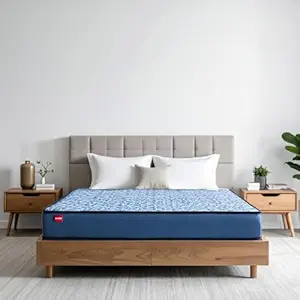
If you are replacing an old, sagging mattress and want a genuine long-lifespan upgrade, the Wakeup India Riserox Pocket Spring King Mattress (78x72x12) is built on individually wrapped pocket springs, the mattress category with the strongest track record for maintaining supportive firmness over 8-10 years of nightly use, in a generously sized 12-inch king profile. Pocket spring construction also isolates motion and wear more evenly across the coil grid than interconnected Bonnell springs, meaning less concentrated fatigue at common pressure points over the mattress’s working life. For anyone tired of replacing a sagging mattress every 3-4 years, this is a size and material upgrade designed to actually last through its warranty period, not just survive it on paper.
To understand how mattress size interacts with durability and room fit, see our King vs Queen Size Mattress Guide, or browse other long-lasting options in our mattress collection.
How to Read a Mattress Warranty Document Before You Buy
Most buyers skim past the warranty card and only read it when they need to file a claim — by then it is often too late to negotiate terms or understand exclusions. Before purchasing, ask the retailer or check the product page for these specific details.
Sagging Threshold Definition
Find out the exact depth of sagging that qualifies for a warranty claim (commonly 1.5-2 inches, measured without anyone lying on the mattress). A vague warranty that just says “covers sagging” without a measurable threshold is harder to claim against in practice.
Prorated vs Full Coverage Periods
Many long warranties (8-10 years) only offer full replacement or repair value in the first few years, shifting to a prorated partial-value replacement for the remaining period. Confirm whether your warranty is full-term or prorated, and from which year the proration begins.
Base and Setup Requirements
Check whether the warranty requires the mattress to sit on a specific type of base (slatted, solid platform, or a specific model of divan) to remain valid. Using an incompatible or unsupportive base is one of the most common reasons genuine sagging claims get rejected.
Registration Requirements
Some brands require online product registration within 30-90 days of purchase to activate the full warranty term. Missing this step, even if you retain the purchase invoice, can complicate a future claim.
Transferability
If you plan to move homes or sell the mattress in a resale situation, check whether the warranty transfers to a new owner or new address, since some warranties are tied specifically to the original purchaser.
Comparing Warranty Terms Across Mattress Brands
Warranty length alone should not be the deciding factor between brands, since a 10-year warranty from a brand with weak after-sales service is often worth less in practice than a 7-year warranty backed by responsive customer support and a straightforward claims process. When comparing options, weigh the warranty term against the brand’s manufacturing reputation, the material quality (pocket spring and rubberized coir generally justify longer warranties than basic PU foam), and, where available, genuine customer reviews specifically mentioning warranty claim experiences rather than just initial purchase satisfaction. A slightly shorter warranty on a well-built, reputable brand’s mattress is often a safer long-term bet than a longer warranty on an unfamiliar or budget brand’s basic construction.
Frequently Asked Questions
How long does a mattress typically last in India?
Most mattresses last 7-10 years depending on material, with pocket spring and rubberized coir mattresses generally outlasting basic PU foam or Bonnell spring mattresses.
Does a 10-year warranty mean the mattress will last 10 years?
Not necessarily. Warranties typically cover manufacturing defects and sagging beyond a specific depth, not gradual comfort loss, and are often prorated, so read the exclusions rather than assuming full replacement coverage.
What are the clearest signs a mattress needs replacing?
Visible sagging or body impressions over 1-1.5 inches, new or worsening aches upon waking, increased motion transfer from a partner, and spring noise are the clearest physical signs.
Can rotating a mattress really extend its lifespan?
Yes. Regular head-to-foot rotation every 2-3 months distributes wear more evenly across the mattress, meaningfully delaying the point at which sagging becomes noticeable.
Does Indian humidity shorten mattress lifespan?
Yes, particularly for foam and natural fibre mattresses without adequate ventilation, since trapped moisture can accelerate material degradation and encourage mould growth inside the mattress core.
Should I replace my mattress base along with the mattress?
If your existing base is sagging, broken, or unsupportive, yes — an inadequate base accelerates wear on even a high-quality new mattress, effectively shortening its usable lifespan.
Is it worth upgrading to a larger size when replacing an old mattress?
If your sleeping arrangement has changed (new partner, co-sleeping children, pets) or your current size feels cramped, replacement time is a practical point to upgrade size along with material quality.
Conclusion
Mattress lifespan is a combination of material quality, maintenance habits, and climate exposure — not just the number printed on a warranty card. Watch for physical signs of wear (sagging, new aches, increased motion transfer) rather than waiting for a warranty to expire, and when it is time to replace, choose a material built for genuine longevity in Indian conditions. The Wakeup India Riserox Pocket Spring King Mattress is built specifically for that kind of long-term, low-maintenance durability.
Related guide: See our furniture return and replacement policy guide for more.