🔥 Flat 10% OFF on First Order | Premium Wooden Furniture | Free Shipping

Crockery Cabinet vs Sideboard vs Bar Cabinet: Which Storage Unit Do You Need? (2026)

Shopping for dining or living room storage and can’t decide between the three? This crockery cabinet vs sideboard vs bar cabinet comparison breaks down exactly what each one is built for, with real Sheesham wood options and prices, so you buy the one that actually matches how you use your dining space — not just the one that looks nicest in a photo.
Table of Contents
Crockery Cabinet vs Sideboard vs Bar Cabinet: Quick Comparison Table
| Crockery Cabinet | Sideboard | Bar Cabinet | |
|---|---|---|---|
| Primary use | Display & store crockery, glassware | Linen, cutlery & serving pieces | Bottles, glassware, bar tools |
| Doors | Usually glass-front (visible display) | Solid wood doors (hidden storage) | Solid or glass, often with a lock |
| Best room | Dining room | Dining room / living room | Living room / home bar corner |
| Typical width | 3 – 4 ft | 4 – 5 ft | 2.5 – 3.5 ft |
| Starting price (this catalogue) | ₹12,999 | ₹13,999 | ₹17,949 |
What Is a Crockery Cabinet?
A crockery cabinet is built to be seen through, not just opened — glass-front doors show off your dinner sets, glassware, and decorative plates while keeping dust off. It’s the right pick if you host regularly and want your good crockery on display rather than buried in a solid cabinet you have to dig through before every dinner party.
What Is a Sideboard?
A sideboard is the workhorse of the three — solid wood doors and drawers hide table linen, cutlery trays, serving dishes, and everyday crockery you don’t want on display. It also doubles as a serving surface during meals, which is why it’s traditionally placed directly against a dining room wall within arm’s reach of the table.
What Is a Bar Cabinet?
A bar cabinet is the most specialised of the three: built specifically to store bottles upright, hold stemware (often with a built-in glass rack or holder), and sometimes include a lockable compartment. It belongs in the living room or a dedicated home-bar corner, not the dining room, since it’s meant to be a standalone entertaining feature rather than table-service storage. If you’re deciding between a bar cabinet and a rolling bar trolley, our Bar Trolley vs Bar Cabinet guide covers that specific comparison.
Which One Should You Buy?
- You host dinner parties and want your crockery on display: go with a crockery cabinet.
- You need everyday dining storage that stays out of sight: go with a sideboard.
- You entertain in the living room and want a proper drinks station: go with a bar cabinet.
- You have a large dining room and want all three functions: many households pair a sideboard (for daily use) with a smaller bar cabinet in the adjoining living room, and skip the crockery cabinet unless display matters to you specifically.
Real Picks & Prices
Crockery Cabinets
- Home Furniture Wood Kitchen Crockery Cabinet, Glass Door (Natural Finish) — ₹12,999 (MRP ₹38,997)
Sideboards
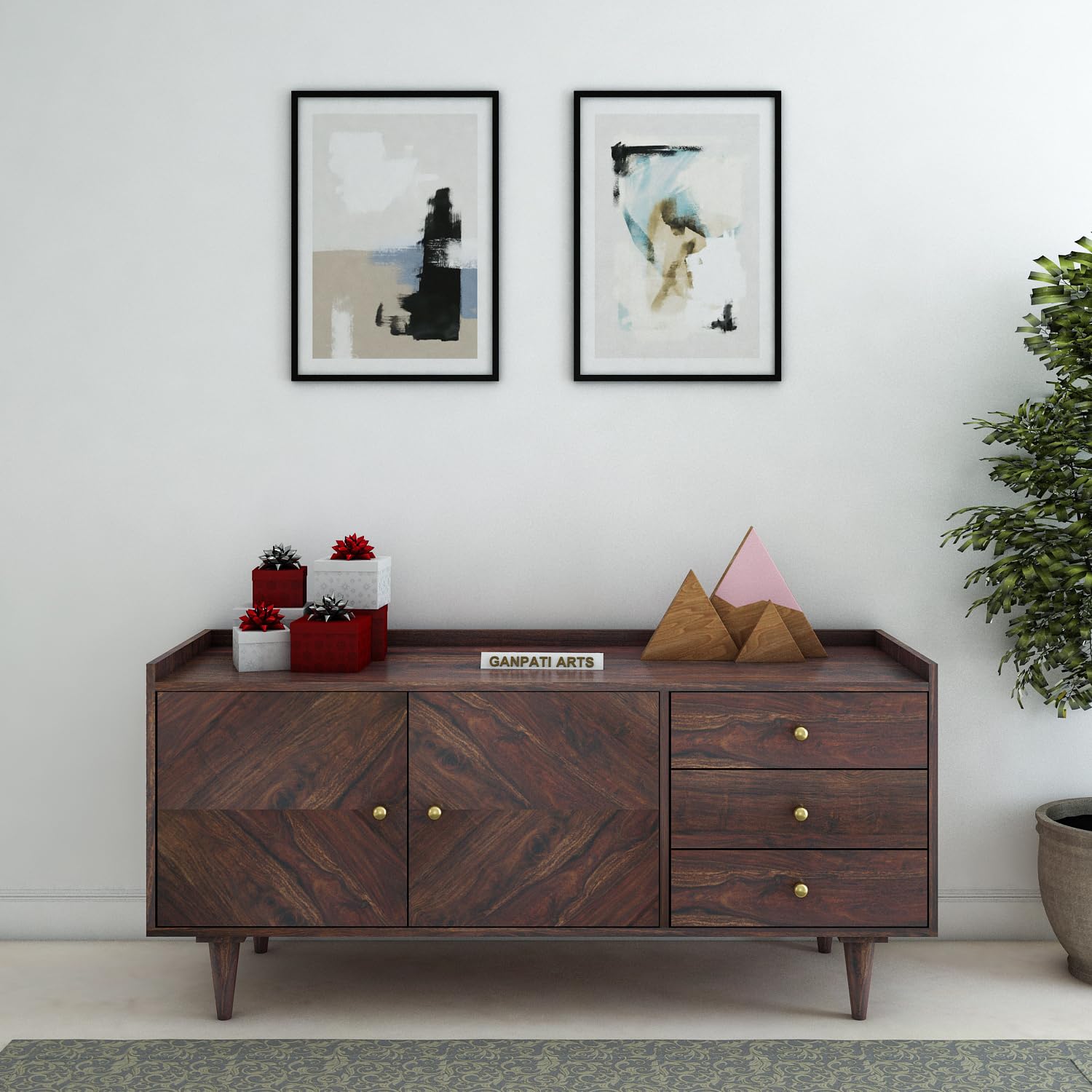
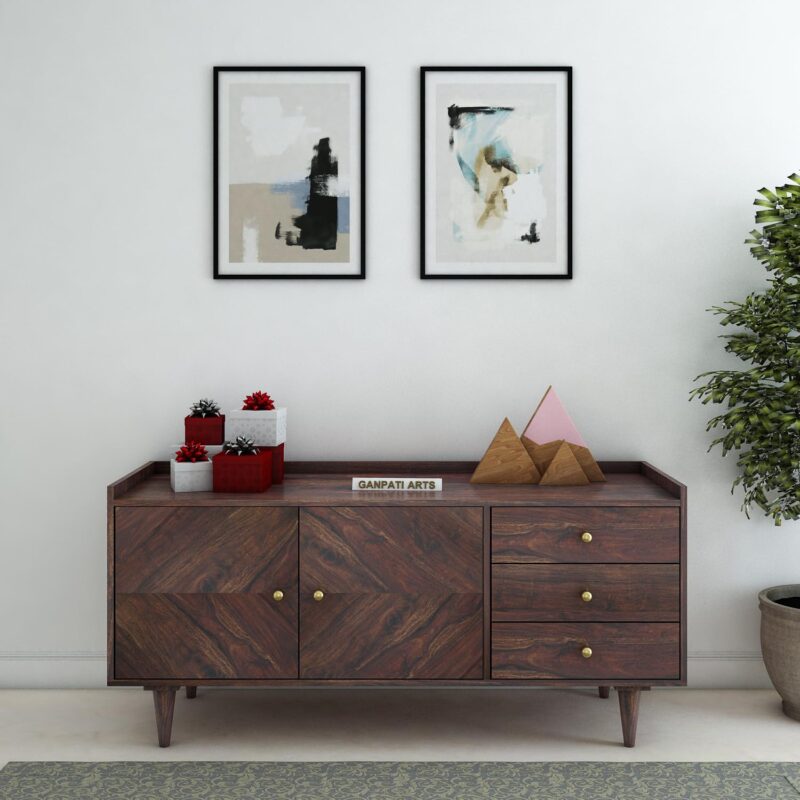
- Ganpati Arts Sheesham Wood Sideboard, 3 Drawers + 2 Doors (Walnut) — ₹15,399 (MRP ₹76,995)
- Solid Sheesham Wood Sideboard Cabinet, 3 Drawer + 3 Door (Natural Finish) — ₹16,899 (MRP ₹50,697)
- Sheesham Wood Sideboard Cabinet for Living Room (Walnut) — ₹13,999 (MRP ₹41,997)
Bar Cabinets
- Ganpati Arts Sheesham Wood Bar Cabinet with Storage — ₹17,949 (MRP ₹53,847)
- Sheesham Wood Bar Cabinet with Storage (Honey Finish) — ₹23,749 (MRP ₹71,247)
See our full roundups for more options: Best Kitchen Crockery Cabinets, Best Wooden Sideboard Cabinets, and Best Sheesham Wood Bar Cabinets.
Can You Use All Three in One Room?
Yes, and larger Indian dining-cum-living spaces often do: a sideboard against the main dining wall for everyday serving, a compact bar cabinet in the living room corner for entertaining, and a crockery cabinet reserved for a formal dining room if the home has one. The key is not duplicating function — if your sideboard already has enough drawer space for cutlery and linen, you don’t need a second piece doing the same job.
Maintenance Tips
Glass-front crockery cabinets need regular glass cleaning in addition to wood care — use a standard glass cleaner on the panes only, never on the wood frame. For bar cabinets, wipe up spills immediately since alcohol can strip varnish finishes over time. Full wood care routine here: Sheesham & Teak Wood Furniture Care Guide.
Detailed Buying Checklist for Each Storage Type
Crockery Cabinet Checklist
- Glass panels should be tempered/toughened for safety, not plain glass.
- Check shelf spacing is adjustable if you own tall serving pieces or jugs.
- Confirm the back panel is solid wood, not just a thin hardboard sheet, for long-term stability.
Sideboard Checklist
- Drawer runners should glide smoothly under a moderate load — test this in-store or check reviews if buying online.
- Look for at least one lockable or child-safe drawer if you store anything breakable or sharp (carving knives, wine openers).
- Depth of 16–18 inches is enough to hold standard dinner plates flat without tilting.
Bar Cabinet Checklist
- Check for a dedicated bottle rack or divider — loose bottles rolling around damage both the bottles and the cabinet interior.
- A lock is worth prioritising in homes with children or frequent domestic help turnover.
- Ventilation matters less here than in a TV unit, but avoid placing it in direct sunlight, which can affect both the wood finish and any spirits stored inside over time.
How Room Size Should Influence Your Choice
In a compact 1–2BHK, a single well-chosen sideboard usually outperforms buying two smaller pieces, since it consolidates dining and general storage into one footprint — pair it with a small bar cabinet only if entertaining is a regular occurrence, not an occasional one. In a larger 3BHK-plus home with a dedicated formal dining room, a crockery cabinet becomes far more worthwhile, since there’s enough wall space to dedicate one piece purely to display without it feeling like the room’s only storage option. Larger homes can also comfortably fit all three pieces across the dining and living areas without any one room feeling overfilled, which is rarely true in a smaller apartment — see our Small Apartment Furniture Guide if you’re working with limited square footage.
Understanding the Price Range: Why These Vary So Much
Within each category, price differences mostly come down to three factors: wood thickness and joinery quality, the number of drawers versus doors (drawers cost more to manufacture well since they need runners), and finish complexity — a hand-applied multi-step polish costs more than a single-coat lacquer. The listed MRPs above are considerably higher than the selling price in every case, which is standard for solid wood furniture sold through online marketplaces in India; use the actual selling price, not the MRP, as your real budget reference point.
Longevity and Resale: Which Holds Up Best Over Time
Sideboards see the heaviest daily use of the three — opened multiple times a day for cutlery and linen — so hinge and runner quality matters most here for long-term durability. Bar cabinets see less frequent but higher-value use (spills, occasional heavy bottles), so a durable, spill-resistant finish matters more than daily wear resistance. Crockery cabinets see the least physical wear since they’re opened less often, but their glass panels are the most likely failure point over a long ownership period, so check the glass fitting and edge sealing carefully before buying. Across all three, solid Sheesham wood construction consistently outlasts engineered wood alternatives by several years, which is reflected in resale value if you ever move homes and sell furniture rather than transport it.
Styling Tips for Each Storage Piece
A crockery cabinet looks best styled the way a museum case does — group similar items together (all your good glassware on one shelf, dinner plates stacked by size on another) rather than mixing everything randomly, since the whole point of glass doors is a curated view. A sideboard, precisely because its storage is hidden, can be styled on top instead: a table runner, a pair of candlesticks, and a piece of art hung above it turns a purely functional piece into a visual anchor for the dining wall. A bar cabinet benefits from a small tray on top for the glasses currently in rotation, plus one or two bottles displayed rather than stored, which signals “bar” at a glance even before anyone opens the doors.
Which Wood Finish Suits Which Piece
Walnut and darker finishes tend to suit bar cabinets particularly well, since the deeper tone reads as more formal and pairs naturally with glassware and metal bar tools. Natural and honey finishes work better for sideboards and crockery cabinets in brighter, everyday dining spaces, since the lighter tone doesn’t compete visually with patterned crockery or table linen. If you already own other Sheesham wood furniture in the room — a dining table or chairs, for instance — matching the finish family (rather than the exact shade) keeps the room cohesive without everything needing to be from the same product line.
Combining Pieces from Different Product Lines
It is completely fine to pair a sideboard from one collection with dining chairs or a bar cabinet from another, as long as the wood tone family matches. Most buyers assume a full matched set looks more polished, but professional stylists frequently mix pieces deliberately to avoid the showroom-catalogue look, using one consistent material (solid Sheesham wood, in this case) as the thread that ties the room together instead of an identical product line.
Whichever piece you choose first, measure your dining wall before ordering — the same way you would for a TV unit or console table (see our sizing guides linked throughout this post). A sideboard or crockery cabinet that is even a few inches too wide for the wall it is meant to sit against is one of the most common and most avoidable furniture-return reasons in this category.
One final practical note: if you are furnishing a new home from scratch, buy the sideboard or crockery cabinet before the dining table if budget forces you to stagger purchases. Storage furniture is harder to retrofit around an existing table’s footprint than the other way around, and you will feel the lack of dining storage daily long before you notice the table itself needs an upgrade.
Keep this comparison bookmarked if you are furnishing in stages — most households end up owning at least two of these three pieces within a few years of moving in, and knowing the distinction ahead of time saves a returned or regretted purchase later.
Crockery Cabinet vs Sideboard vs Bar Cabinet: Quick Recap
In short, crockery cabinet vs sideboard vs bar cabinet comes down to display versus hidden storage versus dedicated bar function.
Frequently Asked Questions
What is the difference between a sideboard and a crockery cabinet?
A sideboard has solid doors that hide storage, while a crockery cabinet typically has glass doors so you can display crockery and glassware behind them.
Can a sideboard be used as a bar cabinet?
Yes, a sideboard with enough drawer and shelf space can double as informal bar storage, but a dedicated bar cabinet offers better bottle organisation and sometimes a lock, which a sideboard lacks.
Which is better for a small dining room: sideboard or crockery cabinet?
A sideboard is usually more practical for a small dining room since it hides clutter, while a crockery cabinet works best if you specifically want to display your dinnerware as decor.
Is Sheesham wood suitable for a bar cabinet?
Yes, solid Sheesham wood is dense and resists staining and warping, making it a durable choice even with occasional spills near a bar cabinet.
How much storage does a standard sideboard have?
Most sideboards in this size range include 2-3 drawers and 2-3 cabinet doors, giving roughly 8-10 cubic feet of combined storage.
Do I need both a sideboard and a bar cabinet?
Only if you entertain often and want dedicated drinks storage separate from your everyday dining storage — otherwise a single well-sized sideboard can usually handle both.
Conclusion
The short version: choose a crockery cabinet if you want your dinnerware on display, a sideboard for everyday hidden dining storage, and a bar cabinet if you entertain and want a dedicated drinks station. All three are available in solid Sheesham wood in our catalogue — browse the real picks above, or explore our Complete Living Room Furniture Buying Guide for how they fit into a full room plan.
Reference: Wikipedia – Sideboard.