
Complete Kids Bedroom Furniture Guide: Bunk Beds, Storage & Safety Tips (India 2026)

Furnishing a child’s room means balancing three things most other rooms don’t have to: safety, growth room, and a budget that survives them outgrowing it in a few years. This kids bedroom furniture guide covers what to actually buy, a full bunk-bed safety checklist based on official safety standards, and real solid Sheesham wood options currently in stock.
Table of Contents
- What Furniture Does a Kids Bedroom Actually Need
- Bunk Beds vs Single Beds: Which to Choose
- Bunk Bed Safety Checklist
- Real Sheesham Wood Beds for Kids Rooms
- Storage Furniture: Wardrobes & Bookcases
- Room Layout Tips for Shared Kids Rooms
- Choosing Safe, Durable Materials
- Common Mistakes Parents Make
- Frequently Asked Questions
What Furniture Does a Kids Bedroom Actually Need
Beyond a bed, a functional kids room needs three things: closed storage for clothes (a wardrobe, since open shelving gets messy fast with children), low-reach storage for toys and books (a bookcase or open shelf they can access without climbing), and a bed sized for the room rather than the child — since children outgrow beds far slower than they outgrow the room’s available floor space.
Bunk Beds vs Single Beds: Which to Choose
Choose a bunk bed when two children share a room and floor space is limited — it’s the single biggest floor-space saver available. Choose a single bed, ideally with a trundle or storage drawers underneath, for a solo child’s room, or when you want the flexibility to host a sleepover without a second full bed. As a rule of thumb, most paediatric and safety guidance recommends the top bunk only for children aged 6 and above, since younger children lack the coordination to safely use a ladder or notice a fall risk in the night.
Bunk Bed Safety Checklist
- Guardrails on both sides of the top bunk, with the rail extending at least 5 inches above the mattress surface.
- No gaps wider than 3.5 inches in the guardrail or between the guardrail and bed frame — this is the exact entrapment-hazard measurement used in official bunk bed safety regulations.
- A secure, angled ladder rather than vertical rungs, so a half-asleep child has better footing.
- Mattress thickness within the manufacturer’s recommended range — a mattress that’s too thick reduces the effective guardrail height and defeats its purpose.
- Top bunk reserved for children 6 years and older.
- Bed placed away from ceiling fans, light fixtures, and windows the top-bunk child could reach.
Real Sheesham Wood Beds for Kids Rooms
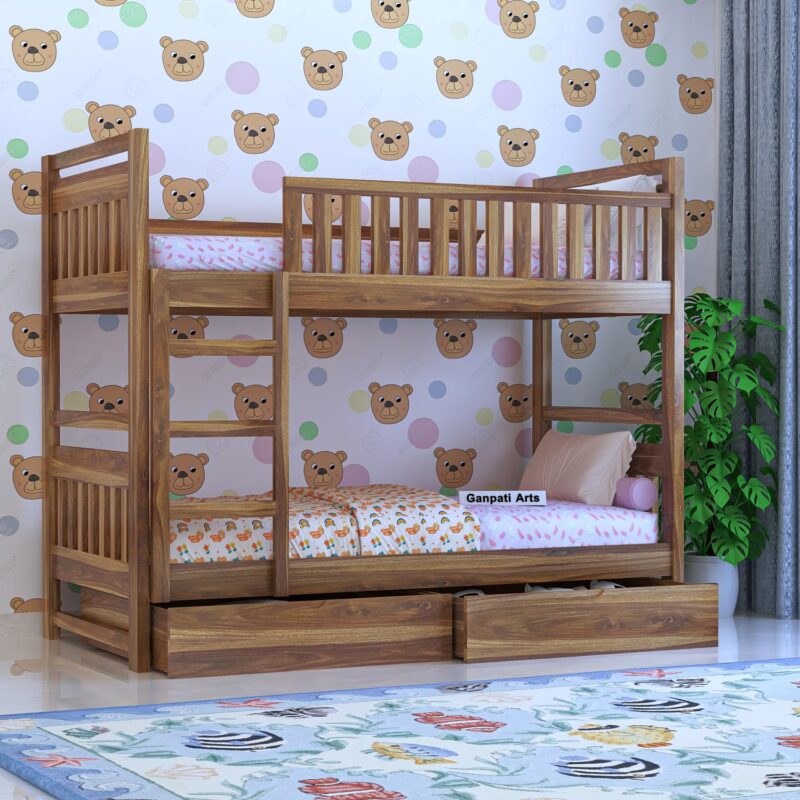
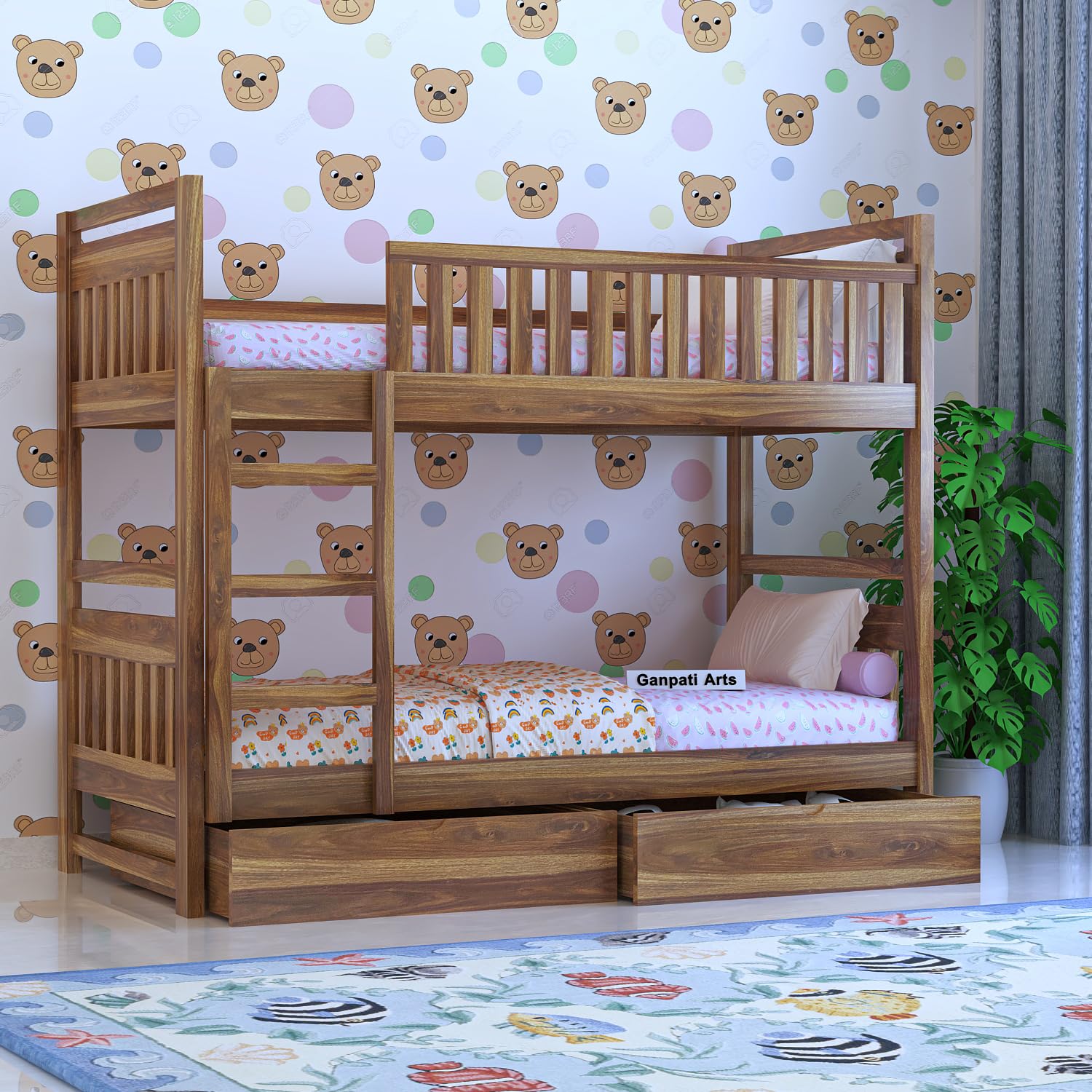
- Wooden Bunk Bed with Storage in Sheesham Wood — ₹32,999 (MRP ₹98,997). Built-in storage drawers under the lower bunk maximise a shared room’s floor space.
- Wooden Bunk Beds for Girls in Sheesham Wood — ₹25,999 (MRP ₹77,997). A softer profile finish, popular for shared sisters’ rooms.
- Sheesham Wood Single Size Trundle Bed with Pull-Out Bed — ₹20,749 (MRP ₹62,247). The best pick for a solo child’s room where sleepovers are common.
- Sheesham Wood Single Bed Without Storage — ₹9,649 (MRP ₹28,947). The most budget-friendly solid wood option for a first big-kid bed.
For more bunk bed details, see our dedicated guides: Sheesham Wood Bunk Beds with Storage and Bunk Beds for Girls: Safety and Style Guide. For solo beds, browse our Best Single Beds in India guide.
Storage Furniture: Wardrobes & Bookcases
A dedicated kids wardrobe keeps clothes off the floor and teaches younger children an early organisation habit — pick one with a lower drawer or shelf your child can reach without help. A low bookcase doubles as both book storage and a soft display shelf for toys; our Wooden Bookcases guide and Wardrobe Designs for Small Bedrooms post both cover options that work well scaled down for a children’s room.
Room Layout Tips for Shared Kids Rooms
In a shared room, place the bunk bed against the wall furthest from the door so a child climbing down at night isn’t disoriented in the dark. Keep a clear path from each bed to the door — avoid placing toy storage or a study corner directly in that path. If the room also needs to double as a play space, a bunk bed frees up significantly more usable floor area than two single beds side by side.
Choosing Safe, Durable Materials
Solid Sheesham wood is a strong choice for kids’ furniture specifically because it doesn’t splinter easily and holds up to the daily impact of children climbing, jumping, and dragging toys across it — unlike particleboard furniture, which can chip at the edges and expose sharp corners over time. See our full Solid Wood vs Engineered Wood comparison for the durability difference in detail.
Common Mistakes Parents Make
- Buying a bunk bed for a child under 6 for the top bunk, against standard safety guidance.
- Skipping the guardrail gap check — always confirm gaps are under 3.5 inches before buying secondhand or unbranded bunk beds.
- Choosing an oversized wardrobe that eats into play space, when a compact wardrobe plus under-bed storage often works better.
- Placing the bed directly under a window the child could reach from the top bunk.
- Ignoring mattress thickness limits on bunk beds, which reduces effective guardrail height.
Choosing the Right Mattress for a Bunk Bed
Bunk bed mattresses need to stay within a specific thickness range — usually 5 to 6 inches — because a thicker mattress reduces how much of the guardrail actually sits above the sleeping surface, quietly defeating the safety margin the guardrail is designed to provide. Foam mattresses are generally preferred over spring mattresses for the top bunk specifically, since they weigh less, which matters both for the child moving it during sheet changes and for the overall load the bed frame carries. Always check the mattress size against the bed frame’s exact dimensions before buying separately, since even a half-inch oversized mattress can push against the guardrail from the inside and reduce its effective height.
Setting Up a Reading or Study Corner Without a Desk
Not every kids room has space for a full study table, and that’s fine — a low bookcase positioned beside the bed with a floor cushion or bean bag creates a functional reading corner for younger children who mostly need picture-book access, not a formal desk. For school-age children who do written homework, a fold-down wall shelf or a corner of the dining table often works better than squeezing in a desk that eats into the room’s only open play space; reserve a dedicated study table for when the child is consistently doing 30+ minutes of seated homework daily, typically from around age 8–9 onward.
Budgeting for Kids’ Furniture by Age Stage
For toddlers (2–5 years), prioritise a low single bed with rounded edges over a bunk bed entirely — the safety guidance in this guide already rules out top bunks for this age group, so spend the budget on a sturdy low bed and a small, reachable wardrobe instead. For the 6–10 age range, this is when a bunk bed becomes a realistic option if siblings share a room, and when storage needs jump significantly as school supplies and toys accumulate — a wardrobe with a drawer plus a proper bookcase earns its cost here. For teenagers, furniture needs shift toward durability and slightly more adult-scaled pieces — a single bed with storage (skipping the bunk bed and trundle stage) and a larger wardrobe tend to be the better long-term investment, since teenage furniture typically needs to last through to when they leave home.
Transitioning From Crib to First Big-Kid Bed
Most children move from a crib to a first bed between 18 months and 3 years, and a low single bed without storage — like the budget Sheesham option listed above — is usually the right first step rather than jumping straight to a bed with tall storage drawers a toddler could climb. Keep the transition simple: same room, same general bedtime routine, and ideally the bed positioned in a similar spot to where the crib was, since children adjust faster to a new bed shape than to a completely rearranged room at the same time. Save the upgrade to a storage bed, trundle, or eventual bunk bed for a year or two later, once the child is sleeping through the transition reliably.
Maintenance and Longevity for Kids’ Furniture
Children’s furniture takes far more physical impact than adult furniture — climbing, jumping, drawing on surfaces — so solid wood construction pays off faster here in avoided repairs than almost anywhere else in the home. Check bunk bed ladder rungs and guardrail bolts for looseness every few months, since regular climbing gradually works screws loose in a way that isn’t always visible until you specifically check. Wipe up crayon, marker, or food spills promptly with a barely damp cloth rather than scrubbing, which can dull the wood finish over time; our full furniture care guide covers the complete routine.
Shared Rooms vs Separate Rooms: What Changes
When siblings share a room, a bunk bed is only half the planning — each child also benefits from having one clearly “theirs” storage piece, even if it’s just one shelf of a shared bookcase or one drawer of a shared wardrobe, to reduce daily squabbles over space. In separate rooms, furniture can be sized down further since there is no need to plan around two children’s belongings in one footprint, which often means a single bed with storage and a compact wardrobe comfortably covers the room’s needs without a bunk bed at all.
Whatever combination of pieces you choose, walk through the safety checklist above one more time after the furniture is fully assembled and positioned in the room, not just when it arrives — wall proximity, window access, and ceiling fan clearance can only be properly checked once everything is in its final place.
Budget for these purchases in stages rather than furnishing the whole room at once — a bed and a wardrobe first, storage and decor second. Children’s furniture needs change quickly enough in the early years that spreading the spend also gives you room to adjust the plan as you learn what your specific child actually uses versus what looked good on a shopping list.
Print or save the safety checklist above separately from this guide — it is worth re-checking every year or two as your child grows, since a setup that was safe at age 6 may need adjustment by age 9 as sleeping habits and room use change.
Kids Bedroom Furniture Guide: Quick Recap
This kids bedroom furniture guide boils down to three things: age-appropriate beds, checked safety features, and storage your child can reach.
Frequently Asked Questions
At what age can a child sleep on a bunk bed top bunk?
Most safety guidance recommends the top bunk only for children aged 6 and above, since younger children may lack the coordination to use the ladder safely.
How wide should bunk bed guardrail gaps be?
Guardrail gaps should not exceed 3.5 inches, and the rail should extend at least 5 inches above the mattress to prevent entrapment or falls.
Is Sheesham wood safe for children’s furniture?
Yes. Solid Sheesham wood resists splintering and chipping better than particleboard, which is important for furniture that takes daily impact from children.
Should I buy a bunk bed or two single beds for a shared room?
A bunk bed saves significantly more floor space, making it the better choice for smaller shared rooms, while two single beds work better if the room is large enough and you prefer more independence between siblings.
What storage furniture does a kids room need?
At minimum, a wardrobe for clothes and a low bookcase or open shelf for books and toys that the child can access without help.
How do I make a bunk bed safer for young children?
Reserve the top bunk for children 6 and older, check guardrail gaps are under 3.5 inches, use an angled ladder, and keep the mattress within the manufacturer’s recommended thickness.
Conclusion
The right kids bedroom setup balances safety, storage, and floor space: a bunk bed for shared rooms (only once your child is 6+), a trundle single bed for solo rooms with occasional sleepovers, plus a right-sized wardrobe and low bookcase for storage they can reach themselves. Browse the real Sheesham wood picks above, or see our Complete Bedroom Furniture Buying Guide for the full-home version of this planning approach.
Reference: eCFR Title 16 Part 1213 – Safety Standard for Entrapment Hazards in Bunk Beds.