🔥 Flat 10% OFF on First Order | Premium Wooden Furniture | Free Shipping

Steel Almirah vs Wooden Almirah: Which Is Better for Indian Homes? (2026)

Walk into almost any furniture showroom in India and you will be offered a choice between a steel almirah and a wooden almirah for the same bedroom, usually at very different price points and with very different sales pitches. Steel almirah vs wooden almirah is one of the most common decisions Indian homeowners face when planning bedroom storage, and the right answer depends less on which one is “better” in the abstract and more on what you are storing, how long you plan to keep it, and what kind of bedroom you are furnishing it for. This guide compares both honestly, including where steel genuinely wins, using real pricing, real maintenance expectations, and the specific situations where each material makes more practical sense than the other — rather than treating this as a simple “wood is always better” or “steel is always cheaper” debate, since neither framing holds up once you factor in how long you plan to keep the piece and where it will sit in your home.
Table of Contents
- Steel Almirah vs Wooden Almirah: Side-by-Side Comparison
- Durability: Which One Actually Lasts Longer
- Cost Comparison: Upfront Price vs Long-Term Value
- Looks and Interior Fit: Bedroom Styling Considerations
- Maintenance: What Each One Actually Needs
- When a Steel Almirah Is Genuinely the Better Choice
- Storage Capacity and Interior Layout
- Which One Should You Buy If You’re Renting?
- Quick Buying Checklist Before You Choose
- FAQs
Steel Almirah vs Wooden Almirah: Side-by-Side Comparison
Before going into detail, here is how the two compare across the factors that actually matter for an Indian bedroom:
| Factor | Steel Almirah | Wooden Almirah (Solid Sheesham/Teak) |
|---|---|---|
| Typical price range | ₹8,000–₹25,000 | ₹25,000–₹45,000+ |
| Resistance to termites/pests | Complete — no organic material to attack | Good when solid wood is properly treated and polished, requires occasional care |
| Resistance to moisture/humidity | Good, though prone to rust if the coating chips | Good with proper finish; solid wood handles humidity better than engineered boards |
| Weight and stability | Lighter, easier to move or relocate | Heavier, more stable, less likely to tip or shift |
| Aesthetic fit | Utilitarian, works best in lockers, offices, utility rooms | Matches traditional and modern Indian home interiors, doubles as a style statement |
| Resale and longevity | 10–15 years typical before rust/dent issues become visible | 20+ years with proper care; solid wood often outlasts the home’s first renovation cycle |
| Noise | Doors can be noisy, prone to denting | Generally quieter, solid hinges don’t dent the same way |
Durability: Which One Actually Lasts Longer
This is where the steel almirah vs wooden almirah debate gets genuinely nuanced, because “durability” means different things depending on the threat. Steel wins outright against termites and borer insects, since there is simply no organic material for them to attack — this makes steel a reasonable choice in regions with severe termite pressure or for storing items where even a small risk of pest damage is unacceptable. However, steel almirahs are vulnerable to rust once the paint or powder coating chips, especially in coastal or high-humidity cities, and a dented steel door rarely looks or closes the same way again.
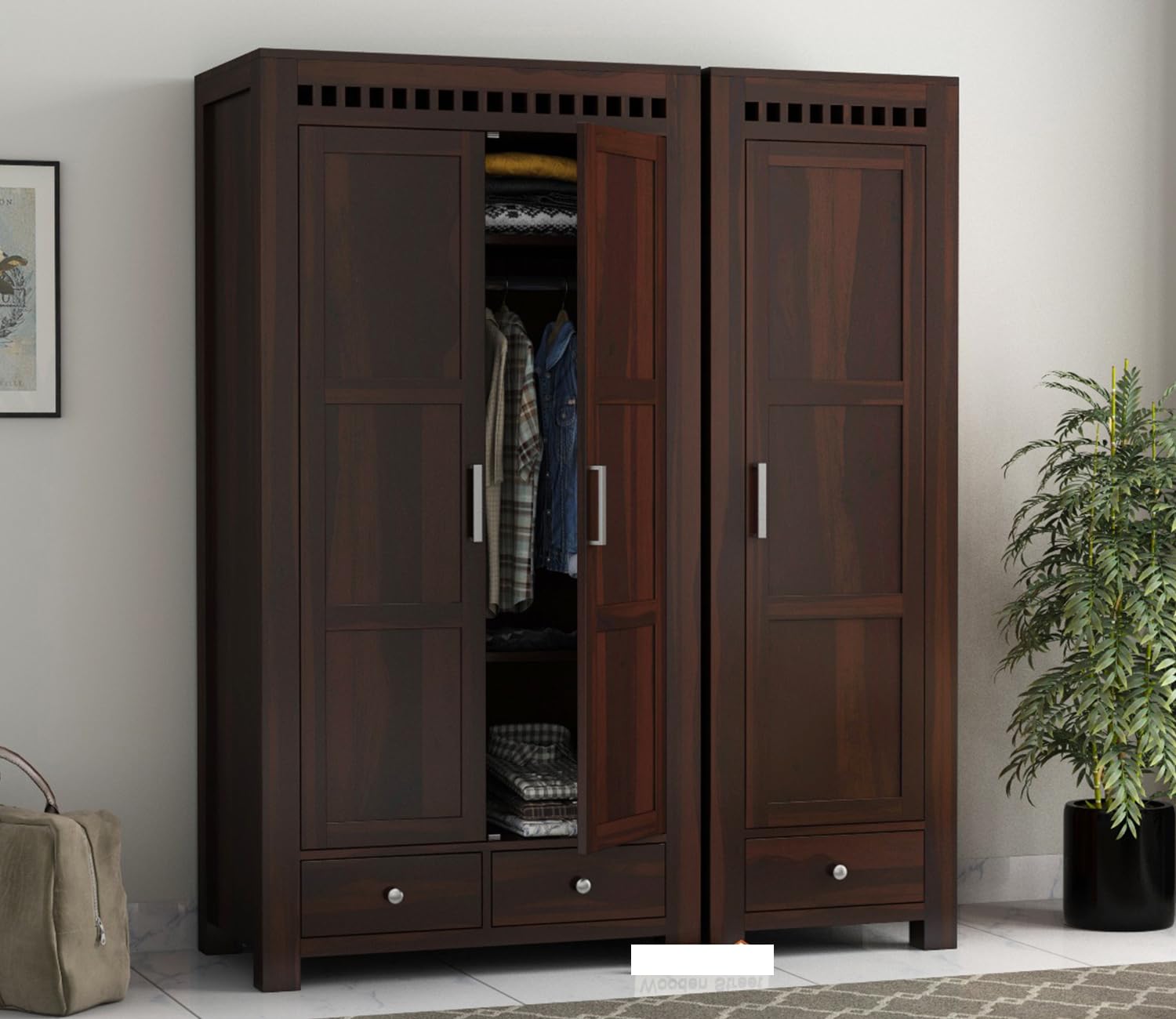
Solid wooden almirahs, like a solid Sheesham wood wardrobe, handle dents and knocks far better — a scuff on solid wood can usually be sanded and re-polished, while a dent in sheet steel is permanent. With basic seasonal care (the kind covered in our solid wood furniture maintenance guide), a well-made solid wood almirah in Sheesham or teak routinely outlasts a steel almirah by 5 to 10 years, because wood does not rust and solid wood construction does not fatigue or warp the way thinner steel sheeting can over two decades of daily door use.
Cost Comparison: Upfront Price vs Long-Term Value
Steel almirahs typically cost less upfront — commonly ₹8,000 to ₹25,000 for a standard double-door unit, depending on gauge thickness and brand. A solid wooden almirah, such as a Sheesham wood wardrobe with drawer priced around ₹30,999, or a 3-door Sheesham wood wardrobe around ₹39,998, costs more at purchase. The real comparison, though, is cost per year of useful life, not sticker price alone. A ₹15,000 steel almirah that needs replacing after 12 years due to rust and dent damage works out to roughly ₹1,250 per year. A ₹35,000 solid wood almirah that lasts 22+ years with basic polish maintenance works out to roughly ₹1,590 per year — close enough that the decision genuinely comes down to priorities other than pure cost-per-year, such as resale value, aesthetic fit, and how the piece will be used.
Looks and Interior Fit: Bedroom Styling Considerations
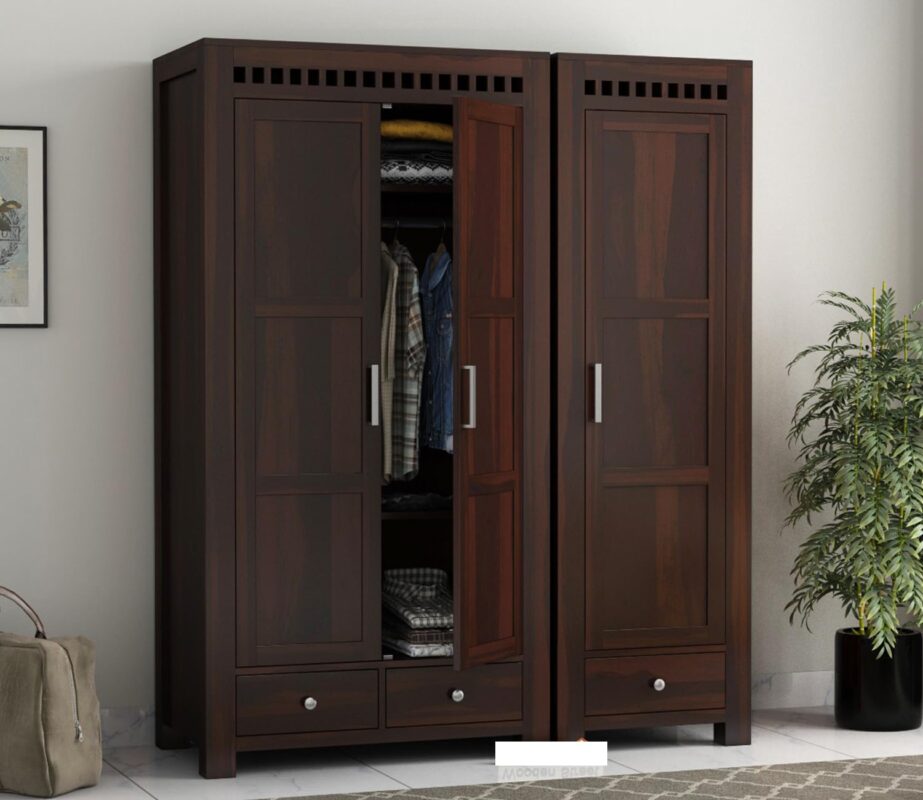
Steel almirahs are built for function first — most come in a limited palette of grey, cream, or dark finishes with a visibly metallic, utilitarian look that works well in a utility room, office locker area, or a bedroom where storage is purely practical. A solid wooden almirah, by contrast, is usually chosen specifically because it also functions as a visible piece of bedroom furniture — natural grain, carved detailing, and finishes like walnut or honey tone are picked to match the rest of the room’s décor, not just hide contents behind a door. If the almirah will sit in the main bedroom as a visible piece of furniture rather than a back-room storage unit, this aesthetic gap is usually the deciding factor over price.
Maintenance: What Each One Actually Needs
A steel almirah needs minimal routine maintenance — wiping down and occasionally checking hinges and locks — but if the surface coating is ever scratched through to bare metal, rust can start within weeks in a humid Indian climate, and once rust begins, it tends to spread rather than stay contained to the scratch. A solid wooden almirah needs slightly more attention: periodic polishing (every 6–12 months), keeping it away from direct, prolonged moisture exposure, and the kind of monsoon-season care covered in dedicated wood-care guides — but the payoff is that this maintenance actively extends the piece’s life and appearance, rather than simply delaying inevitable rust.
When a Steel Almirah Is Genuinely the Better Choice
To be fair to steel: it is the better choice for a bachelor pad, hostel room, rented accommodation where you may need to relocate the unit easily, a utility or storeroom, or any situation where fire resistance and tamper resistance (steel almirahs often come with better lock mechanisms for valuables) matter more than how the piece looks. If budget is the primary constraint and the almirah will live in a space that is not meant to double as a style statement, steel remains a sensible, practical option.
Storage Capacity and Interior Layout
Steel almirahs are generally built around a standard internal layout — a hanging rod section, a few fixed shelves, and sometimes a small locker compartment — with limited flexibility to change the configuration after purchase. Solid wooden almirahs, particularly multi-door models like a 3-door Sheesham wood wardrobe, typically offer a wider mix of hanging space, adjustable or multiple shelf levels, and drawer combinations, which makes it easier to organise clothing by type (folded versus hanging) rather than working around a fixed steel shelf layout. For a family bedroom where storage needs change over time — more hanging space needed as a child grows, more folded storage needed as wardrobe size increases — the flexibility of a wooden almirah’s layout is a practical, if less obvious, advantage.
Which One Should You Buy If You’re Renting?
If you are furnishing a rented home or PG accommodation and expect to relocate within a few years, a steel almirah’s lower weight and lower upfront cost generally make more sense — it is easier to move between rentals and represents a smaller sunk cost if your next place already has built-in storage. If you own your home or are in a rental you expect to stay in for 5+ years, a solid wooden almirah is the better long-term investment, both because you will see more of its useful life before any potential move, and because it holds resale value better than a dented, used steel unit typically does in the second-hand market.
Quick Buying Checklist Before You Choose
Whichever direction you lean, check these points before finalising either option:
- Gauge thickness (steel): Thinner gauge steel dents more easily and feels less sturdy when the door is opened and closed. Ask for the specific gauge if it is not listed.
- Wood type and construction (wooden): Confirm it is solid Sheesham or teak wood construction, not a plywood or MDF frame with a wood-look laminate — the durability difference between the two is significant, even though both may be marketed as “wooden almirah.”
- Lock quality: If the almirah will store valuables, check the lock mechanism specifically, regardless of material — a flimsy lock defeats the purpose of either material’s structural strength.
- Room measurements: Measure door swing clearance and ceiling height before ordering either type, since multi-door wooden almirahs in particular can be taller and wider than expected once assembled.
- Warranty terms: Check what the warranty actually covers — rust for steel, and joint/hinge integrity for wood — since this tells you what the manufacturer itself considers the most likely failure point.
Quick Recap: Steel Almirah vs Wooden Almirah
Steel almirah vs wooden almirah comes down to priorities: steel wins on upfront cost, termite resistance, and portability; solid wood wins on long-term durability against dents, aesthetic fit for a main bedroom, and resale value. For a visible bedroom storage piece meant to last two decades or more, solid Sheesham or teak wood is generally the stronger long-term investment. For background on wardrobe and cabinet furniture construction more broadly, see the wardrobe entry on Wikipedia.
Frequently Asked Questions
Which lasts longer, a steel almirah or a wooden almirah?
A well-maintained solid wood almirah typically lasts 20+ years, often longer than a steel almirah’s typical 10–15 year lifespan before rust or dent damage becomes a problem, provided the wood receives basic periodic polishing.
Is a steel almirah better for humid or coastal climates?
Not necessarily. Steel is vulnerable to rust once its coating is scratched or chipped, which happens more easily in humid, salty coastal air. A properly finished solid wood almirah often handles humidity more gracefully over time, provided it is kept away from direct water exposure.
Is a wooden almirah worth the extra cost over steel?
If the almirah will be a visible piece of bedroom furniture and you plan to keep it for 15+ years, the cost-per-year difference narrows significantly, and solid wood generally offers better aesthetics and resale value. For a purely functional storage unit in a utility space, steel’s lower upfront cost may be the more sensible pick.
Can a wooden almirah be repaired if damaged, like a steel one can?
Solid wood is generally easier to repair cosmetically — scratches and minor dents can be sanded and re-polished. Steel can be repainted, but a dent in the sheet metal itself usually cannot be fully restored without replacing the panel.
Which is better for storing valuables, steel or wooden almirah?
Steel almirahs often come with sturdier built-in lock mechanisms and are harder to physically break into or cut through, making them a common choice specifically for storing cash, documents, or jewellery, separate from general clothing storage. Many households actually use both — a smaller steel locker for valuables and documents, and a larger wooden almirah for everyday clothing storage and bedroom styling.
Conclusion
There is no universally “better” answer in the steel almirah vs wooden almirah decision — it depends on whether you need a functional storage box or a bedroom furniture piece built to last two decades, how long you plan to stay in your current home, and whether the piece needs to double as a visible part of your bedroom’s interior styling or simply hold clothes out of sight. If you are furnishing a main bedroom and want both storage and style, browse our solid Sheesham wood almirah price guide for real options across 2-door, 3-door, and 4-door sizes, or check our complete bedroom furniture buying guide to plan the whole room together.