
Sheesham vs Teak vs Mango Wood: Which Is Best? (2026)

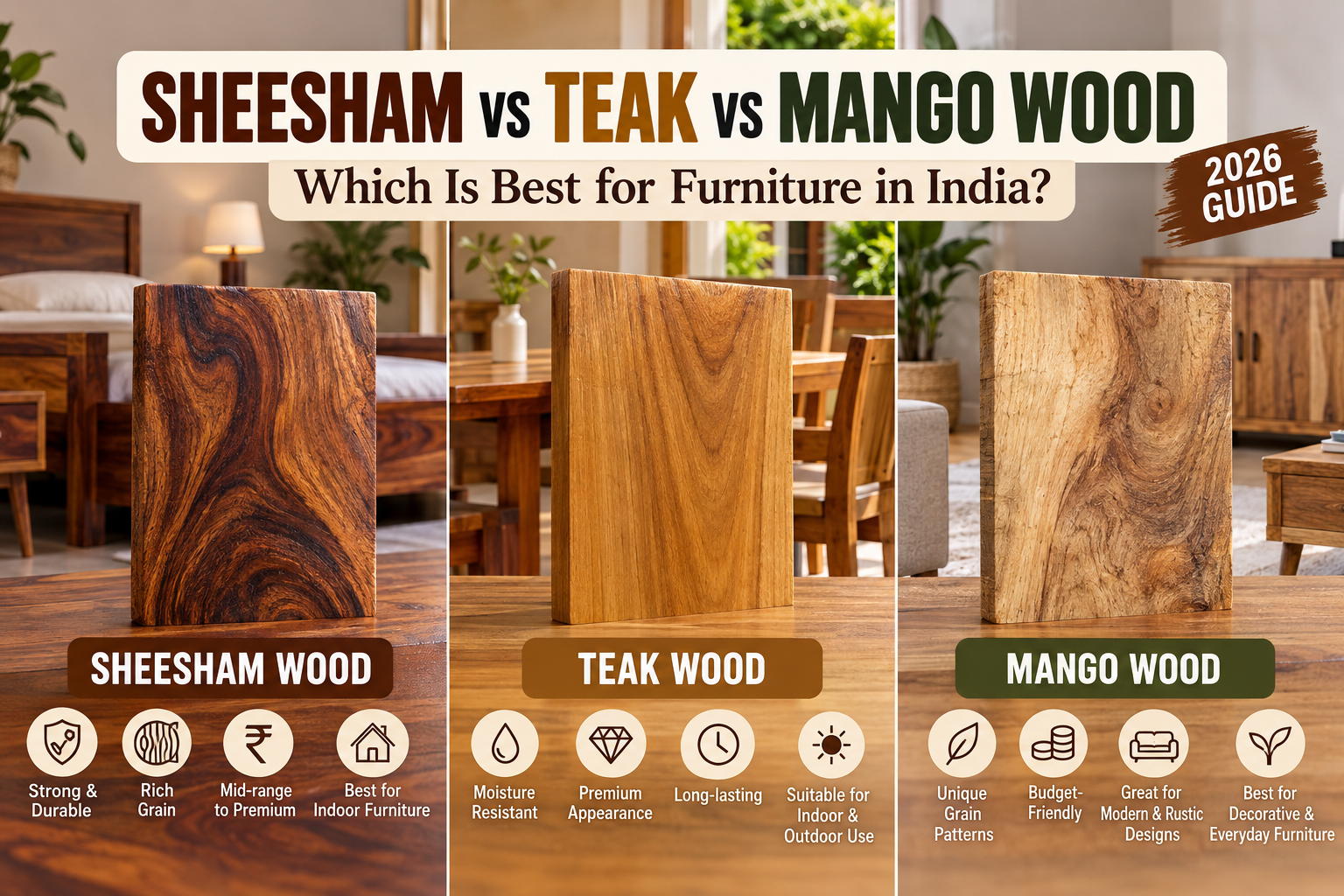
Sheesham vs Teak vs Mango Wood: Which Is Best for Furniture in India? (2026 Guide)
Choosing the right wood is one of the most important decisions when buying wooden furniture. Whether you are purchasing a king-size bed, a dining table, a wooden sofa, a wardrobe or a coffee table, the type of wood affects its appearance, durability, maintenance requirements and overall cost.
Three popular options in India are Sheesham wood, teak wood and mango wood. Each has its own strengths, and the best choice depends on your budget, furniture requirements, interior style and the conditions in which the furniture will be used.
Quick answer: Sheesham wood is a strong all-round option for everyday indoor furniture, teak wood is valued for its moisture resistance and long-term durability, while mango wood is an attractive option for buyers who want distinctive grain patterns and a comparatively budget-friendly solid-wood choice.
In this guide, MyFurnitureStore explains the differences between Sheesham vs Teak vs Mango Wood so you can make an informed furniture-buying decision.
Quick Comparison: Sheesham vs Teak vs Mango Wood
| Feature | Sheesham Wood | Teak Wood | Mango Wood |
|---|---|---|---|
| General price positioning | Mid-range to premium | Usually premium | Often more budget-friendly |
| Appearance | Rich brown tones and distinctive grain | Golden to medium brown grain | Varied grain with warm, lighter tones |
| Strength and hardness | Hard and durable | Durable, with good dimensional stability | Suitable for many everyday furniture applications |
| Moisture resistance | Depends on seasoning and finish | Naturally good moisture resistance | Requires suitable treatment and moisture protection |
| Maintenance | Regular dusting and protection from moisture | Regular care; avoid prolonged dampness | Regular care and protection from moisture |
| Common furniture uses | Beds, sofas, dining tables, cabinets | Premium furniture, tables and selected outdoor applications | Coffee tables, cabinets, sideboards and accent furniture |
| Best suited for | Everyday indoor furniture | Premium furniture and moisture-prone environments where appropriate | Decorative, contemporary and value-focused furniture |
This is a general comparison. Actual performance depends on timber quality, seasoning, construction, finish, joinery and maintenance. Price varies by dimensions, design, wood grade and manufacturer.
1. What Is Sheesham Wood?
Sheesham wood, also known as Indian rosewood, comes from the tree Dalbergia sissoo. It is widely used in Indian furniture and is recognised for its rich brown colour, contrasting grain and solid construction possibilities.
Sheesham is a popular choice for people who want traditional wooden furniture as well as contemporary designs.
Benefits of Sheesham Wood Furniture
1. Strong construction
Good-quality Sheesham timber is hard and durable, making it suitable for frequently used furniture such as beds, dining tables, sofa frames and cabinets.
2. Distinctive natural grain
Its grain can feature attractive variations in colour and pattern. This gives each piece a natural character rather than a completely uniform appearance.
3. Versatile furniture designs
Sheesham can be used for carved headboards, minimalist bed frames, dining tables, bookshelves, coffee tables and wooden storage units.
4. A balance between durability and cost
Compared with many premium teak options, Sheesham can provide a useful balance of strength, appearance and cost for indoor furniture.
Things to Check Before Buying Sheesham Furniture
- Ask whether the product is made from solid Sheesham or a combination of materials.
- Check whether the wood has been properly seasoned or kiln-dried.
- Inspect the joints, hardware and overall stability.
- Look for a consistent finish and properly treated surfaces.
- Check the product warranty and care instructions.
Poorly seasoned timber can develop cracks or dimensional changes, so the quality of preparation matters just as much as the species.
Best Uses for Sheesham Wood
Sheesham is a practical option for:
- King-size and queen-size beds.
- Wooden sofa sets.
- Four-seater and six-seater dining tables.
- Wardrobes and storage cabinets.
- TV units and bookshelves.
- Coffee tables and side tables.
Best for: Buyers seeking durable indoor furniture with a rich natural-wood appearance.
2. What Is Teak Wood?
Teak wood comes from Tectona grandis and is valued for its natural oils, durability and resistance to moisture-related deterioration. Its colour commonly ranges from golden brown to medium brown, with a relatively straight or even grain.
Teak has a long history of use in premium furniture and applications where moisture resistance is important.
Benefits of Teak Wood Furniture
1. Good natural moisture resistance
Teak’s natural properties make it a useful option for furniture that may encounter more moisture than typical indoor furniture. However, no wood should be treated as completely waterproof.
2. Dimensional stability
Properly prepared teak generally performs well against changes in moisture compared with many other timber species. Construction and environmental conditions still matter.
3. Premium appearance
Its warm colour and relatively uniform grain work well in elegant, classic and contemporary interiors.
4. Long-term furniture potential
Well-made teak furniture can offer a long service life when constructed from suitable timber and maintained correctly.
Things to Consider Before Buying Teak Furniture
Teak furniture often costs more than comparable Sheesham or mango wood furniture. The premium may be worthwhile for particular requirements, but it does not automatically make every teak product better than every alternative.
Check the wood’s origin, whether it is solid teak throughout or a mixed-material product, the construction quality and the finish.
Be careful with vague descriptions such as “teak finish” or “teak colour.” These terms may describe the appearance rather than the actual wood species.
Best Uses for Teak Wood
Teak may be suitable for:
- Premium dining tables.
- High-quality wooden beds.
- Luxury furniture pieces.
- Furniture in environments where moisture resistance is especially relevant.
- Selected outdoor furniture designed and finished for outdoor use.
Outdoor furniture still needs suitable construction, drainage and maintenance even when made from teak.
Best for: Buyers prioritising premium timber, moisture resistance and long-term furniture use who are comfortable with a higher budget.
3. What Is Mango Wood?
Mango wood comes from the mango tree, Mangifera indica. It is used in furniture for its varied grain patterns, warm colours and ability to complement modern, rustic and contemporary interiors.
Mango wood can be a good choice for buyers who want solid-wood furniture without necessarily paying for a premium timber such as teak.
Benefits of Mango Wood Furniture
1. Distinctive grain patterns
Mango wood can show irregular grain, colour variation and natural markings that make furniture visually interesting.
2. Value-focused furniture options
Mango wood furniture is often positioned at a more accessible price point than comparable premium teak furniture, although the final cost depends on the design and construction.
3. Contemporary design appeal
Its varied appearance works well with rustic interiors, industrial-style décor, modern apartments and warm neutral colour schemes.
4. Resource utilisation
Mango timber can be recovered from trees removed from orchards when they are no longer commercially productive. Responsible sourcing and proper documentation remain important.
Things to Consider Before Buying Mango Wood Furniture
Mango wood is generally less hard than Sheesham, and its performance depends on timber quality, treatment and construction. It should not automatically be considered unsuitable for everyday furniture; the intended use and the design matter.
Before buying, check:
- Whether the wood is properly seasoned and treated.
- The quality of joints and supporting components.
- Whether the finish protects the timber adequately.
- The intended load and use of the furniture.
- The manufacturer’s maintenance recommendations.
Avoid prolonged exposure to water and damp conditions, and wipe spills promptly.
Best Uses for Mango Wood
Mango wood is often used for:
- Coffee tables and side tables.
- Sideboards and cabinets.
- Decorative storage furniture.
- Bookshelves.
- Bedroom dressers.
- Selected dining tables and accent furniture.
Best for: Buyers who value distinctive natural grain, contemporary styling and a comparatively accessible solid-wood option.
4. Sheesham vs Teak vs Mango Wood: Which Is More Durable?
Durability depends on several factors, not just the name of the wood. Hardness, moisture resistance, seasoning, joinery, finish and everyday use all affect how a piece performs.
Sheesham Wood Durability
Sheesham is a hard timber that can work well for furniture used every day. It is a suitable option for beds, dining tables and sofa frames when the timber is properly prepared and the furniture is well constructed.
Its performance can suffer if the wood is inadequately seasoned or exposed to unsuitable moisture conditions.
Teak Wood Durability
Teak is especially valued for its natural moisture resistance and dimensional stability. These qualities can make it a strong candidate for premium furniture and some outdoor applications.
Its higher cost should be considered alongside the actual benefits relevant to your intended use.
Mango Wood Durability
Mango wood can provide useful service in a range of indoor furniture applications. Because its hardness and other characteristics differ from Sheesham and teak, check the construction and intended use rather than assuming every product will perform identically.
Which Wood Wins?
- For a balance of strength and value: Consider good-quality Sheesham.
- For moisture resistance and a premium timber: Consider teak.
- For distinctive grain and value-focused designs: Consider mango wood.
There is no universal winner. A well-built piece of properly seasoned wood can perform better than a poorly made piece of a more expensive species.
5. Which Wood Is Best for Beds?
A bed is a long-term furniture purchase, so frame stability, joint strength, support structure and timber preparation are especially important.
Sheesham Wood Bed
A Sheesham bed can be a practical choice for everyday bedroom use. Its rich grain also complements traditional, modern and contemporary bedroom designs.
Teak Wood Bed
A teak bed may appeal to buyers looking for premium timber and a classic appearance. Compare the extra cost with your budget and the actual specifications of the product.
Mango Wood Bed
Mango wood may be suitable for certain bed designs, depending on construction and the manufacturer’s specifications. Pay particular attention to the supporting frame, centre support, slats and joints.
Buying tip: Check the bed’s internal support structure and the mattress dimensions, not just the headboard design or wood species.
6. Which Wood Is Best for Dining Tables?
Dining tables experience frequent use, spills, movement and surface contact. A suitable finish and stable construction are important regardless of the wood chosen.
- Sheesham: A good option for buyers who prefer pronounced grain and durable indoor furniture.
- Teak: Suitable for premium dining tables where its appearance and moisture-related properties justify the cost.
- Mango: An appealing choice for contemporary, rustic and value-focused dining furniture.
Check the tabletop thickness, leg construction, joinery, finish and care requirements. Always clean spills promptly and use suitable coasters or placemats.
7. Which Wood Is Best for Sofas and Cabinets?
For a wooden sofa, check the frame construction, support points, joints and the quality of the cushioning and upholstery as well as the timber species.
Sheesham is a popular option for visible wooden sofa frames. Teak can be selected for premium designs, while mango wood may suit particular accent or contemporary furniture styles.
For cabinets, wardrobes and sideboards, examine door alignment, hinges, drawer runners, panel construction and the material used for the back and interior. The species alone does not determine the quality of the complete product.
8. Sheesham vs Teak vs Mango Wood: Price Comparison
The cost of wooden furniture depends on much more than the wood species.
Factors that affect the price include:
- Furniture dimensions and weight.
- Timber grade and the amount of solid wood used.
- Seasoning and preparation.
- Design complexity and carving.
- Joinery and hardware quality.
- Surface finish and polishing.
- Brand, workmanship, shipping and warranty.
In general, teak is often the premium-priced option, Sheesham occupies a broad mid-range to premium position, and mango wood is often more budget-friendly. This is a general market pattern rather than a guaranteed price ranking for every product.
Do not compare two products only by their listed prices. Compare the dimensions, material specifications, construction and included features to determine their relative value.
9. Which Wood Is Better for Indian Weather?
India has varied climatic conditions. Dry inland regions, humid coastal areas, monsoon conditions and air-conditioned interiors can affect wooden furniture differently.
For dry or air-conditioned rooms
All three woods can be suitable when properly seasoned, constructed and maintained. Avoid placing furniture next to intense heat sources or exposing it to sudden environmental changes.
For humid regions
Teak’s natural moisture resistance may be an advantage. Sheesham and mango furniture can also be used indoors, but proper seasoning, finish and moisture management remain important.
During the monsoon
Keep furniture away from standing water, damp walls and direct exposure to rain. Maintain reasonable ventilation and wipe up spills promptly.
No wood is completely immune to changes in moisture. The product’s preparation and the conditions in your home matter significantly.
10. How to Identify Quality Wooden Furniture Before Buying Online
Before purchasing wooden furniture online, use this checklist:
- Confirm the wood species: Read the material description carefully.
- Check solid-wood claims: Find out which parts are solid wood and whether other materials are used.
- Review seasoning information: Properly prepared timber helps reduce moisture-related problems.
- Inspect product photographs: Look at the joints, legs, edges and finish where images are available.
- Read the dimensions: Confirm that the furniture fits your room.
- Check the construction: Look for details about frame support, hardware and assembly.
- Review warranty terms: Understand what is covered and what is excluded.
- Check delivery and returns: Read the current policies before ordering.
- Follow care instructions: Use the cleaning and maintenance methods recommended for the specific finish.
- Ask questions when needed: Request clarification if the material or construction is unclear.
A clear product specification is more useful than a broad claim such as “premium quality wood.”
Frequently Asked Questions
1. Is Sheesham wood better than teak wood?
Sheesham can offer an excellent balance of strength, grain appearance and cost for indoor furniture. Teak is particularly valued for moisture resistance and dimensional stability. The better choice depends on the intended use, product quality and budget.
2. Is mango wood good for furniture?
Yes, mango wood can be a suitable material for many indoor furniture applications, including coffee tables, cabinets and accent furniture. Check its preparation, construction and finish before buying.
3. Which wood lasts the longest?
Well-made furniture from suitable, properly seasoned timber can last for many years. Teak has a strong reputation for durability and moisture resistance, while quality Sheesham can also provide long service life. Maintenance and construction are important factors.
4. Which is the most affordable wood for furniture?
Mango wood is often more budget-friendly than comparable teak and Sheesham furniture, but the final price depends on design, dimensions, construction and finish.
5. Is teak wood waterproof?
No wood should be considered completely waterproof. Teak has natural properties that help it resist moisture, but prolonged exposure to water and poor maintenance can still damage furniture.
6. Does Sheesham wood require maintenance?
Yes. Dust it regularly, clean spills promptly and protect it from prolonged moisture and excessive heat. Follow the manufacturer’s instructions for the particular polish or finish.
7. Is mango wood environmentally friendly?
Mango timber can make productive use of trees removed from fruit orchards. Its environmental impact depends on sourcing, land management, processing and manufacturing practices. Look for credible sourcing information rather than relying on the species name alone.
8. How can I tell solid wood from a wood-finish product?
Check the written material specifications and ask which components are solid wood, veneer, laminate or engineered wood. Colour and surface appearance alone are not reliable ways to identify the underlying material.
9. Which wood is best for a wooden bed in India?
Good-quality Sheesham can be a practical choice for many indoor beds. Teak may suit buyers seeking premium timber, while mango wood can work in suitable designs. Always compare frame support, joints, timber preparation and warranty.
10. Where can I buy wooden furniture online in India?
You can explore the available wooden beds, sofas, dining tables, cabinets and other furniture at MyFurnitureStore.in. Review the current product specifications, dimensions, material details, price and delivery terms before making a purchase.
Final Verdict: Sheesham vs Teak vs Mango Wood
The best wood for furniture is the one that meets your needs rather than the one with the most expensive label.
- Choose Sheesham if you want a balance of durability, natural grain and everyday indoor use.
- Choose teak if premium timber and moisture resistance are important priorities and your budget allows for it.
- Choose mango wood if you prefer distinctive grain, contemporary designs and a comparatively value-focused solid-wood option.
Before purchasing, compare the actual construction, seasoning, finish, dimensions and warranty of the furniture. These details can make a major difference to its long-term performance.
Explore the furniture collection at MyFurnitureStore.in to compare available designs and find furniture that suits your home, style and budget.
Disclaimer: Wood characteristics vary by species, timber grade, preparation, finish and construction. Product availability, prices and specifications may change. Always confirm the current product details before purchasing.