🔥 Flat 10% OFF on First Order | Premium Wooden Furniture | Free Shipping

Solid Wood vs HDMR Engineered Wood Furniture: Which to Buy? (2026)

Choosing between solid wood vs engineered wood furniture is one of the most common questions Indian homebuyers face when comparing prices at furniture stores. Solid Sheesham wood and HDMR (High Density MDF/particle board with veneer) engineered wood look similar in photos but behave very differently over 5-10 years of use. This guide compares both using real products and prices so you can decide with confidence.
Table of Contents
- What Is Solid Wood vs HDMR Engineered Wood?
- Side-by-Side Comparison
- Durability and Lifespan in Indian Climate
- Cost Difference: Real Product Prices
- How Each Material Is Actually Manufactured
- Real Buyer Scenarios
- Environmental and Sourcing Considerations
- Where Each Material Makes Sense
- Resale and Long-Term Value
- Maintenance Differences
- Frequently Asked Questions
What Is Solid Wood vs HDMR Engineered Wood?
Solid wood furniture, most commonly Sheesham (Indian Rosewood) in Indian catalogues, is cut and joined from a single timber species with no composite layers. HDMR (High Density MDF/particle Rigid board) is manufactured wood — wood fibres compressed with resin under heat, then finished with a laminate or veneer and typically paired with metal legs. Both are legitimate furniture materials; the right choice depends on budget, how the piece will be used, and how long you want it to last.
Side-by-Side Comparison
| Factor | Solid Sheesham Wood | HDMR Engineered Wood |
|---|---|---|
| Typical Lifespan | 15-25+ years | 7-12 years |
| Weight | Heavy, very sturdy | Lighter, easier to move |
| Water Resistance | Good if polished | Poor – swells if soaked |
| Price (comparable piece) | Higher | Lower |
| Repairability | Can be sanded and refinished | Difficult to repair once damaged |
| Look | Natural grain, ages with patina | Uniform laminate finish |
Durability and Lifespan in Indian Climate
India’s climate swings between humid monsoons and dry summers, which stresses furniture joints and surfaces. Solid Sheesham handles this seasonal movement better because it’s a single dense material that can be sanded and re-polished if it dries out or gets minor water exposure. HDMR boards, by contrast, can swell or delaminate at the edges if water sits on them, which is why HDMR pieces are more common in bedrooms and living rooms than kitchens or balconies. For a deeper look at how another hardwood compares, see our Sheesham Wood vs Teak Wood Furniture guide.
According to the Wikipedia entry on engineered wood, composite wood products are manufactured to be more dimensionally uniform than solid timber, which is exactly why they’re cheaper and faster to produce — but that same manufacturing process is what limits their long-term water and impact resistance compared to solid hardwood.
Cost Difference: Real Product Prices
Here’s what the price gap actually looks like across comparable furniture types currently listed on MyFurnitureStore:
| Product | Material | Price |
|---|---|---|
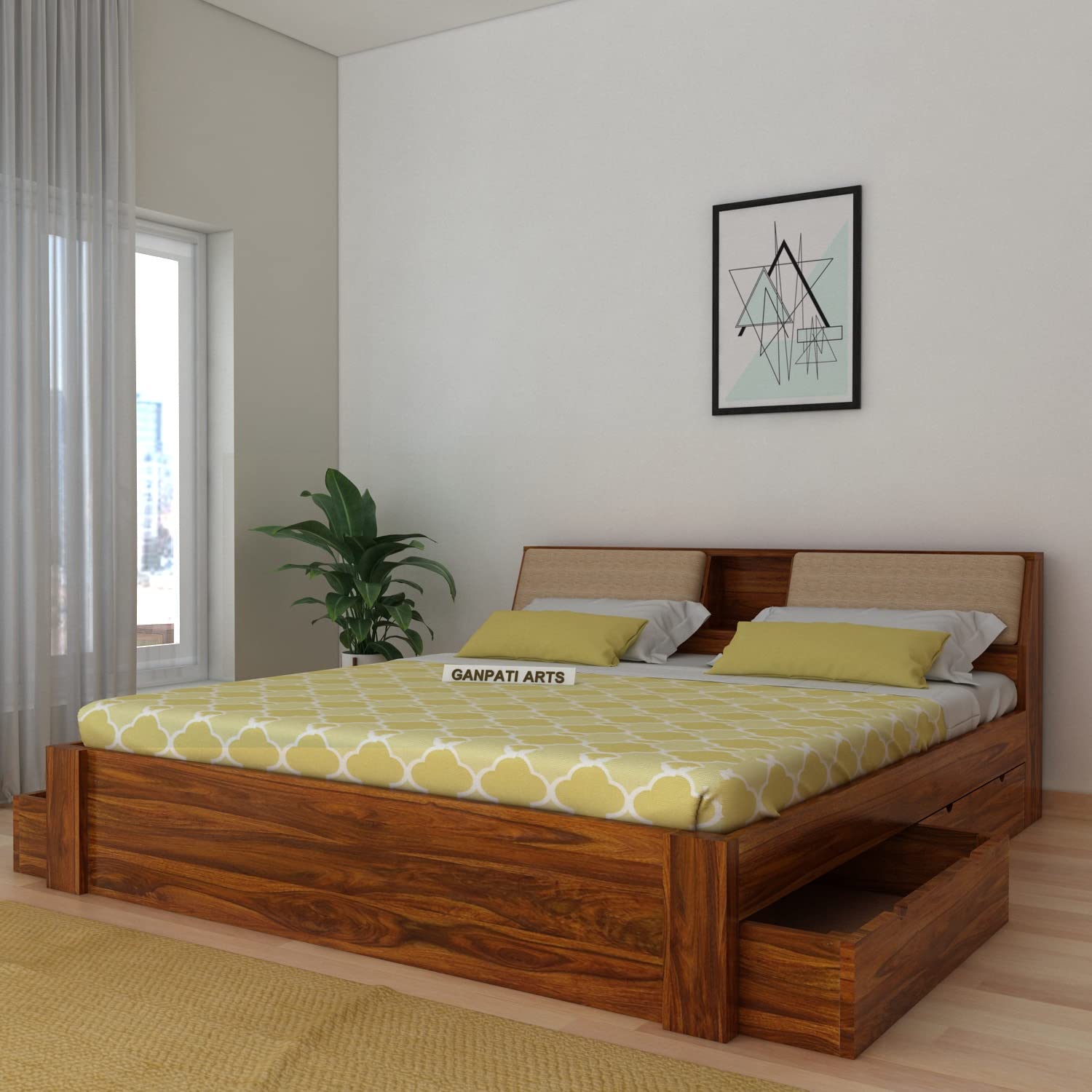
| Solid Sheesham Wood Mayor Queen Size Bed with Storage | Solid Wood | ₹34,899 |
| Wooden Wardrobe with Drawer – Modern Design | Solid Wood | ₹31,499 |
| Wooden Sideboard Cabinet, HDMR Premium Wood & Iron | HDMR | ₹18,498 |
| Wooden Bedside Table, HDMR Premium Wood & Iron Legs (currently out of stock) | HDMR | ₹4,999 |
As the table shows, comparable-sized HDMR pieces run roughly 40-60% cheaper than solid Sheesham equivalents — the trade-off is expected lifespan and repairability, not appearance.
How Each Material Is Actually Manufactured
Solid Sheesham furniture starts as sawn timber that is kiln-dried to reduce moisture content, then cut, joined — often with traditional mortise-and-tenon or dowel joints — and hand-finished with polish or lacquer. Because the entire piece is one material throughout, a scratch or dent can be sanded out and re-polished without showing a visible repair line. HDMR engineered wood is produced by breaking down wood fibres, mixing them with resin binders, and pressing the mixture under heat into flat boards, which are then cut to size, edge-banded, and finished with a laminate, veneer or paint layer. This process is what makes engineered wood dimensionally consistent — boards don’t warp or have knots the way natural timber can — but it also means the surface finish is only skin-deep; sand through the laminate and you expose the composite core underneath, which is far harder to disguise than a repaired solid wood surface.
Real Buyer Scenarios: Which Would You Choose?
Consider three common situations. A young couple furnishing their first rented apartment, planning to move again within 2-3 years, is usually better served by HDMR pieces — lighter to transport, cheaper to replace if damaged in a move, and not a major loss if left behind. A family buying furniture for a home they own and plan to live in for a decade or more should lean toward solid Sheesham for the bed, dining table and wardrobe, since these see the heaviest daily use and the cost amortises well over 15-20 years. A buyer furnishing a guest room or a secondary property that sees occasional use can comfortably choose HDMR even for larger pieces, since lower usage reduces the wear that engineered wood struggles with most.
Environmental and Sourcing Considerations
Sheesham is a relatively fast-growing hardwood compared to teak, and reputable Indian manufacturers now commonly use plantation-grown Sheesham rather than wild-harvested timber, which reduces the sustainability concerns historically associated with hardwood furniture. HDMR, being made from compressed wood fibre and offcuts, uses timber more efficiently at the manufacturing stage since it can incorporate smaller wood scraps that wouldn’t be usable for solid furniture. Neither material is clearly “greener” in every respect — solid wood furniture’s long lifespan reduces landfill waste and replacement manufacturing over time, while HDMR’s efficient use of raw material reduces waste at the production stage.
Where Each Material Makes Sense
When to choose solid Sheesham wood
Choose solid wood for beds, dining tables and wardrobes — pieces that carry heavy daily load, get moved rarely, and that you want to keep for 15+ years or hand down. Browse our Sheesham & Teak Wood Furniture collection for solid options across categories.
When HDMR engineered wood is a smart buy
HDMR works well for bedside tables, sideboards and accent furniture that you might redecorate or replace within 5-8 years, or for renters and first-apartment buyers who need functional furniture on a tighter budget.
Resale and Long-Term Value
Solid Sheesham furniture tends to hold resale value noticeably better than HDMR pieces — secondhand marketplaces in India regularly see used solid wood beds and dining tables sell for 30-50% of their original price after several years, while HDMR furniture with damaged laminate or swollen edges is usually only fit for disposal. If you anticipate selling or passing down furniture eventually, this is worth factoring into the upfront cost comparison, since the effective cost of solid wood over its full ownership period is often lower than the sticker price suggests once resale value is accounted for. It also pays to inspect edges and corners in person or in product photos before buying — these are the first spots to show wear on both materials, and a well-finished edge is often the clearest visual sign of overall build quality regardless of which wood type you choose.
Maintenance Differences
Solid wood needs occasional polishing (every 3-4 months) and can be sanded down if scratched. HDMR furniture should be kept away from standing water and direct sun, since the laminate can peel and the core can swell — damage that generally can’t be repaired, only replaced.
Frequently Asked Questions
Is HDMR furniture bad quality?
No — HDMR is a legitimate, widely used material, especially for furniture that doesn’t need to survive decades of heavy use. It’s a fair trade-off of lower cost for shorter lifespan, not a defect.
Which lasts longer, solid wood or engineered wood?
Solid Sheesham wood typically lasts 15-25+ years with basic care, compared to roughly 7-12 years for HDMR/engineered wood furniture.
Is solid wood furniture worth the extra cost in India?
For furniture you’ll keep long-term — beds, dining tables, wardrobes — yes, because the cost per year of use ends up lower despite the higher upfront price.
Can HDMR furniture be used in humid rooms?
It’s not recommended. HDMR performs best in dry, climate-controlled rooms like bedrooms and living rooms, not kitchens, bathrooms or balconies.
Does solid wood furniture need more maintenance than HDMR?
Yes, slightly — solid wood benefits from periodic polishing, but in exchange it can be repaired and refinished for decades, while damaged HDMR usually needs replacing.
What’s the price difference between solid wood and HDMR furniture?
Based on current listings, comparable HDMR pieces cost roughly 40-60% less than solid Sheesham wood equivalents.
Does engineered wood furniture smell or off-gas?
Some HDMR products can have a mild resin smell when new, which typically fades within a few days to a couple of weeks in a ventilated room. Look for products that mention low-formaldehyde or E1-grade board if this is a concern.
Can I repaint or refinish HDMR furniture later?
It’s possible but limited — laminate surfaces can sometimes be painted with a bonding primer, but you cannot sand and re-stain HDMR the way you can with solid wood, since there’s no real wood grain underneath the laminate layer.
Take your time comparing samples in a showroom if possible, since photos alone rarely convey the weight and surface texture difference between solid wood and engineered wood pieces.
Final Thoughts
Neither material is universally “better” — solid Sheesham wood wins on longevity and repairability, while HDMR engineered wood wins on upfront cost and weight. Match the material to how long you plan to keep the piece and where it will live in your home. Browse solid wood options in our Sheesham & Teak Wood Furniture collection.