
TV Unit Size Guide: How to Choose the Right TV Cabinet for Your Living Room (2026)

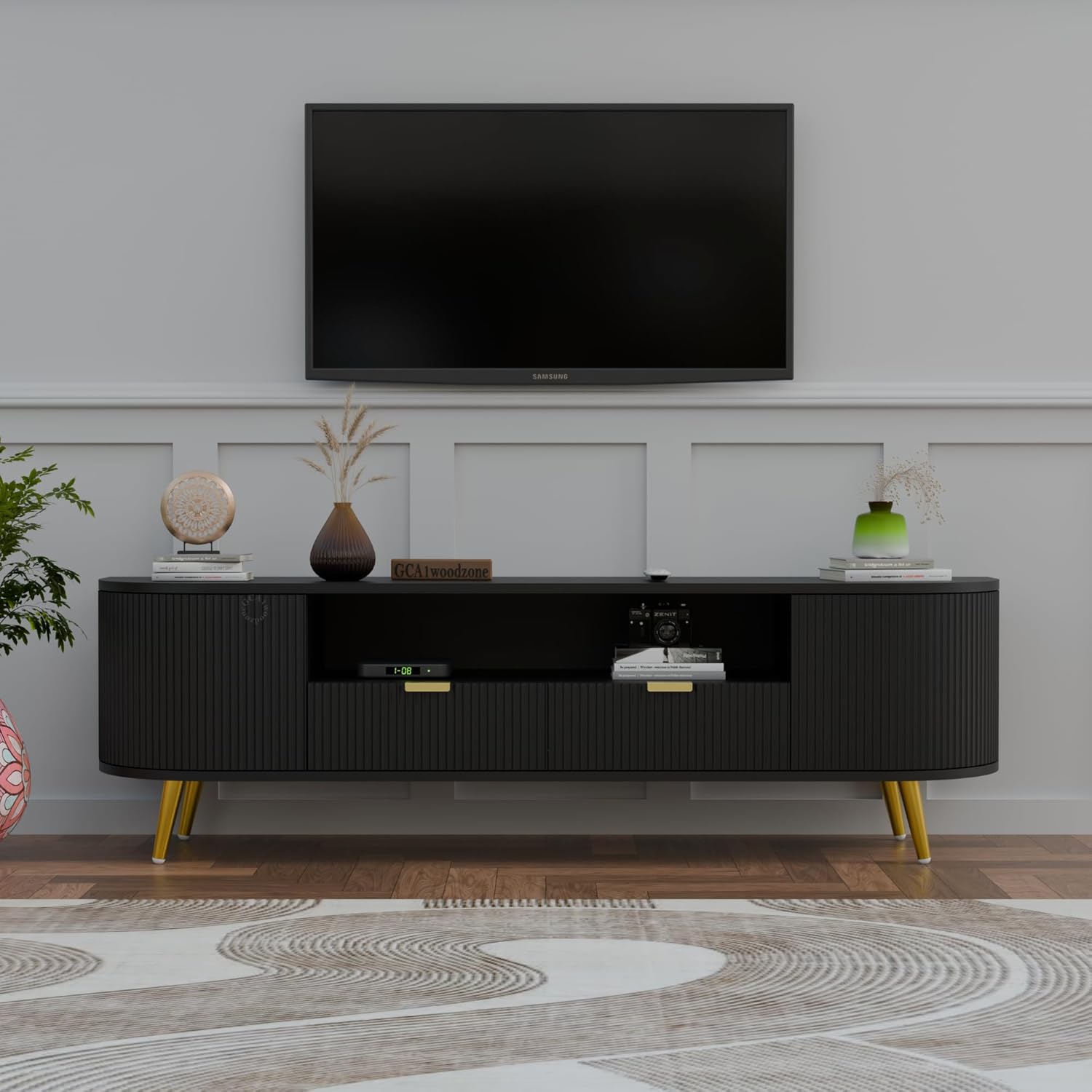
Buying a TV unit before measuring your wall is the single most common mistake Indian homebuyers make — it usually ends with an awkward gap on either side of the cabinet, or a unit so wide it swallows the room. This TV unit size guide gives you the exact screen-to-width numbers Indian interior designers use, so the TV unit you order actually fits your wall, your TV, and your storage needs on the first try.
Table of Contents
- Why TV Unit Size Matters More Than Design
- TV Unit Size Chart: Screen Size to Cabinet Width
- How to Measure Your Living Room for the Right TV Unit
- TV Unit Height: Floor-Standing vs Wall-Mounted
- Best Wooden TV Units for Indian Homes (Real Picks & Prices)
- Sheesham Wood vs Engineered Wood TV Units
- 7 Common Mistakes to Avoid
- Maintenance Tips
- Frequently Asked Questions
Why TV Unit Size Matters More Than Design
Most people shop for a TV unit the way they shop for a cushion cover — by colour and finish. But a TV unit is functional furniture first: it has to hold your TV at the right height, store your set-top box, soundbar, and gaming console, and leave enough breathing room on either side so the wall doesn’t look cramped. Get the width wrong and you either waste wall space or end up with a cabinet that overhangs your TV awkwardly on both sides. A correctly sized TV unit also improves resale value of the room’s look when you eventually upgrade your television — which, in India’s fast-moving TV market, happens more often than people plan for.
TV Unit Size Chart: Screen Size to Cabinet Width (India)
Use this chart as your starting point. It is based on the standard rule interior designers use: TV unit width should be roughly 1.4–1.6 times your TV’s screen width, so the cabinet visually “anchors” the television instead of looking too narrow or too wide.
| TV Screen Size | Recommended TV Unit Width | Ideal Viewing Distance |
|---|---|---|
| 32 inch | 3 – 3.5 ft (90–105 cm) | 4 – 5 ft |
| 43 inch | 4 – 4.5 ft (120–135 cm) | 5.5 – 6.5 ft |
| 50 inch | 4.5 – 5 ft (135–150 cm) | 6 – 7.5 ft |
| 55 inch | 5 – 5.5 ft (150–165 cm) | 7 – 8.5 ft |
| 65 inch | 5.5 – 6.5 ft (165–195 cm) | 8 – 10 ft |
| 75 inch & above | 6.5 – 7.5 ft (195–225 cm) | 9.5 – 12 ft |
A Quick Formula You Can Use at Home
Don’t have a measuring tape handy? Multiply your TV’s diagonal screen size in inches by 2.2 to get the approximate unit width in centimetres, then leave 15–20 cm of clearance on each side if the unit is going between two walls or a window. This one calculation solves 80% of the “my TV unit doesn’t fit” complaints we hear from customers.
How to Measure Your Living Room for the Right TV Unit
Measure Wall Width First
Measure the full usable wall width where the unit will sit, not just the space directly behind the TV. Account for door swings, switchboard panels, and any fixed wiring conduits that might block a flush fit.
Account for Sofa-to-TV Distance
Indian living rooms are frequently 10–14 ft deep. Use the viewing-distance column in the chart above to check your sofa placement is neither too close (eye strain) nor too far (you lose detail on 4K content).
Don’t Forget Skirting, Switchboards & AC Vents
A TV unit that’s a perfect width on paper can still fail if it sits over a floor AC vent or blocks a switchboard you use daily. Always dry-fit with painter’s tape on the floor before finalising your order.
TV Unit Height: Floor-Standing vs Wall-Mounted Units
For a seated viewer on a standard Indian sofa (seat height 16–18 inches), the centre of the screen should land close to eye level, which works out to roughly 42–46 inches from the floor. A floor-standing TV unit that is 14–18 inches tall, with the TV placed on top or wall-mounted just above it, keeps most screen sizes in that comfortable range without needing to tilt your neck up or down. Wall-mounted floating units free up floor space and are a strong pick for smaller living rooms or rental homes where you don’t want a bulky cabinet footprint — see our small living room arrangement guide for layout ideas.
Best Wooden TV Units for Indian Homes (Real Picks & Prices)
All five of these are genuine solid Sheesham wood TV units currently in stock, so the price, image, and storage details below are accurate at the time of publishing.
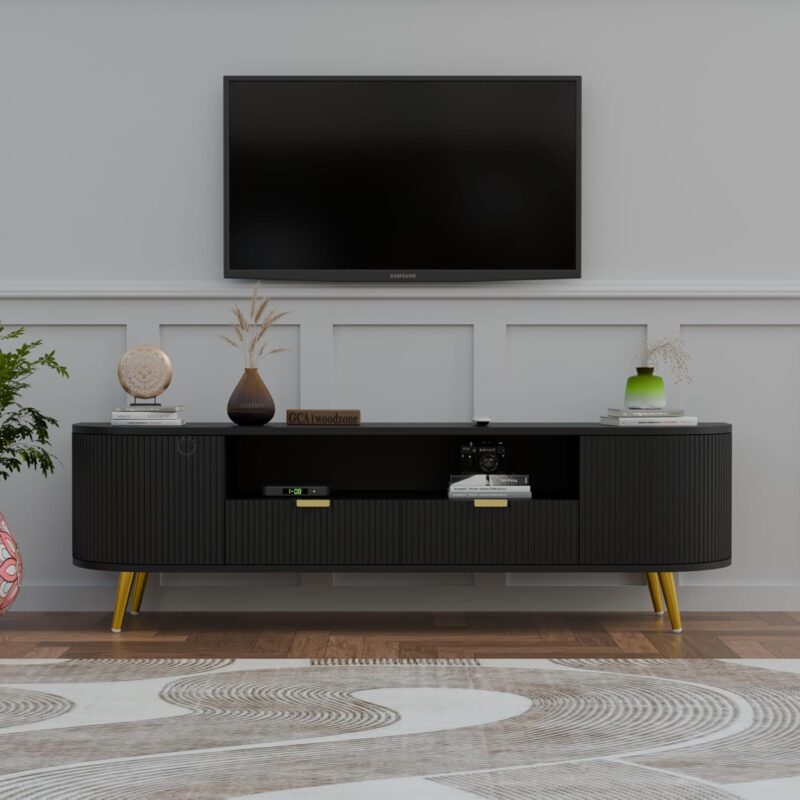
- GCA Woodzone Wooden TV Unit with 2 Doors & Drawers — ₹20,498 (MRP ₹1,02,490). Best for 50–55 inch TVs; closed cabinet storage keeps the set-top box and wiring hidden.
- Sheesham Wood TV Stand with 2 Door, 2 Drawer & Shelf Storage (Walnut Finish) — ₹16,999 (MRP ₹50,997). Compact footprint that suits 43–50 inch TVs in mid-size living rooms.
- Sheesham Wood TV Stand with 2 Door, 2 Drawer & Shelf Storage (Natural Finish) — ₹16,999 (MRP ₹50,997). Same layout as above in a lighter natural finish for brighter interiors.
- Ganpati Arts Sheesham Wood TV Stand with 2 Door & 2 Open Shelves — ₹9,799 (MRP ₹39,196). The most budget-friendly option here, well suited to 32–43 inch TVs in bedrooms or second living areas, backed by a 1-year warranty.
Sheesham Wood vs Engineered Wood TV Units: Which Should You Buy?
Solid Sheesham wood TV units cost more upfront but resist the humidity swings common across most of India far better than engineered wood (MDF/particleboard) options, which can swell or delaminate at the joints over a few monsoons. If you want the full comparison of strength, cost, and lifespan, read our Solid Wood vs Engineered Wood Furniture guide. For a TV unit specifically — a piece that carries real weight and gets opened/closed daily — solid wood hinges and drawer runners simply last longer.
Open Shelves vs Closed Cabinets: Choosing the Right Storage Layout
Open shelves suit households that want the soundbar, gaming console, and remote-control caddy within easy reach and don’t mind a little visible clutter. Closed cabinets with doors are the better pick if you want a clean, hotel-lobby look, or if you have young children or pets who might tug at cables. Several of the units above — like the GCA Woodzone and both walnut/natural Sheesham stands — give you both in one piece: closed doors for the box and router, open shelf space for décor or a speaker.
7 Common Mistakes to Avoid When Buying a TV Unit
- Buying by design alone, without measuring the wall first. This is the #1 return reason for TV units nationwide.
- Ignoring cable routing. Check whether the unit has a back cutout for wires before you order, especially for wall-mounted TVs.
- No ventilation for the set-top box or soundbar. Closed cabinets without back vents can overheat electronics during Indian summers.
- Wrong height for seated eye level. A unit that’s too tall forces you to look up; too short and you strain your neck downward.
- Forgetting switchboards and skirting. Always dry-fit with tape before finalising your order (see our measuring section above).
- Choosing high-gloss finishes in humid coastal cities. Glossy laminates show fingerprints and scratches faster in high-humidity regions.
- Not planning for a future TV upgrade. Buy a unit that comfortably fits one size class larger than your current TV if you plan to upgrade within 3–4 years.
Maintenance Tips to Keep Your Wooden TV Unit Looking New
Dust with a dry microfiber cloth daily, and wipe with a barely-damp cloth followed by immediate drying — standing water is the biggest enemy of Sheesham wood joints. Avoid placing the unit in direct AC or window draft, which dries out wood over time and can cause hairline cracks. For a full room-by-room care routine, see our Sheesham & Teak Wood Furniture Care Guide.
TV Unit Placement: Wall-Facing vs Corner vs Media Wall
Most Indian living rooms default to a wall-facing TV unit directly opposite the main seating, and for good reason — it’s the simplest layout to wire and the easiest for everyone on the sofa to see without turning. A corner placement works well in L-shaped or unusually proportioned rooms where there’s no single long wall, but it usually means a narrower TV unit than the size chart above recommends, since corner space is inherently limited on both sides. A dedicated media wall — where the TV unit spans almost the entire wall width with matching side cabinets — suits larger living rooms and doubles as a design feature, but needs at least 8–10 feet of clear wall to look intentional rather than oversized.
Budget vs Premium TV Units: What Actually Changes
The price difference between a ₹9,799 TV unit and a ₹20,498 one in our catalogue isn’t just cosmetic. Higher-priced units typically use thicker wood panels (18–19mm vs 12–15mm), soft-close hinges that don’t loosen with daily use, and better drawer runners rated for heavier loads like a full-size soundbar or gaming console. Budget units are a completely reasonable choice for a secondary bedroom or a first apartment, but if the unit is going in your primary living room and will see daily opening and closing for years, the mid-to-premium tier tends to hold its finish and hardware noticeably longer — something worth weighing against the up-front saving.
TV Units for Bedrooms vs Living Rooms
A bedroom TV unit can generally be smaller and lower than a living room one, since the viewing distance from a bed is usually shorter and you’re often reclining rather than sitting upright — a 32–43 inch screen on a compact 3–3.5 ft unit works well for most Indian bedrooms. Living room units should follow the full size chart above more strictly, since they’re viewed from a fixed sofa distance by multiple people at once, and any sizing mismatch is far more noticeable in a shared space than in a bedroom used primarily by one or two people.
One more sizing detail people miss: if you plan to wall-mount the TV above a lower floor unit rather than resting it on top, check the mount’s VESA compatibility against your TV model before ordering either piece. A mismatched VESA pattern is the most common reason a wall-mount bracket sits unused in a cupboard while the TV ends up back on top of the unit anyway — confirm compatibility first, then choose the unit height accordingly.
TV Unit Size Guide: Quick Recap
To recap this TV unit size guide in one line: pick a unit 1.4-1.6x your screen width, 14-18 inches tall, and measure your wall before you order.
Frequently Asked Questions
What size TV unit do I need for a 55-inch TV?
For a 55-inch TV, look for a TV unit that is roughly 5 to 5.5 feet (150–165 cm) wide, with a viewing distance of 7 to 8.5 feet from your sofa.
How far should a TV unit be from the sofa?
It depends on screen size: 4–5 ft for a 32-inch TV up to 9.5–12 ft for a 75-inch TV. Check the size chart above for your exact screen size.
Is Sheesham wood good for TV units?
Yes. Sheesham (Indian rosewood) is dense, naturally resistant to warping in humid weather, and takes daily wear from doors and drawers far better than engineered wood, making it one of the best materials for TV units in Indian homes.
Should the TV unit be wider than the TV?
Yes, ideally 1.4 to 1.6 times the TV’s screen width, so the cabinet visually balances the television instead of looking too narrow underneath it.
What is the standard height of a TV unit in India?
Most floor-standing TV units in India are 14 to 18 inches tall, which keeps the screen centre close to seated eye level on a standard sofa.
Can a TV unit be used without a wall mount?
Yes. All the TV units featured in this guide are designed as standalone floor units — the TV simply rests on top, so no wall drilling or mounting bracket is required.
Conclusion
The right TV unit size comes down to one simple ratio: cabinet width at roughly 1.4–1.6 times your TV’s screen width, positioned at 14–18 inches off the floor. Measure your wall first, check the chart above for your screen size, then choose between the five real Sheesham wood TV units we’ve linked based on your budget and storage needs. For more living room planning, browse our Complete Living Room Furniture Buying Guide, our roundup of TV unit designs for modern homes, or if you’re furnishing a compact flat, our Small Apartment & 1BHK Furniture Guide.
Reference: Onida – How to Choose the Right TV Size for Your Room.