🔥 Flat 10% OFF on First Order | Premium Wooden Furniture | Free Shipping

Second Hand vs New Furniture: What Actually Costs Less in India? (2026)

OLX, Quikr, and moving-out sale groups on Facebook are full of tempting furniture deals – a sofa set at half its retail price, a dining table from someone relocating abroad. The second hand vs new furniture decision looks simple on the surface (cheaper is better), but once you factor in repair costs, missing warranties, and how much life is actually left in a used piece, the real math often points the other way. This guide breaks down the true cost of both options by furniture type, so you can decide with real numbers instead of just the upfront price tag.
Table of Contents
- The Real Appeal of Second-Hand Furniture in India
- Hidden Costs of Buying Second-Hand Furniture
- Total Cost of Ownership: Second-Hand vs New
- When Second-Hand Actually Makes Sense
- When New Furniture Wins
- Real New Furniture Picks With Cost Breakdown
- Where People Buy Second-Hand Furniture
- The Environmental Angle
- Negotiating a Fair Price
- How to Evaluate a Second-Hand Piece If You Do Buy Used
- Common Mistakes
- Frequently Asked Questions
The Real Appeal of Second-Hand Furniture in India
Understanding both sides of this trade-off properly, rather than defaulting to whichever option feels cheaper today, is what actually saves money over the years you’ll own the furniture.
India’s frequent job relocations, especially among IT and consulting professionals moving cities every few years, have created a genuinely large second-hand furniture market. Someone relocating for work often needs to offload a sofa set or dining table within days, which pushes prices well below retail. For students, first jobbers, and anyone in short-term rented housing, this can be a legitimately good deal – the furniture only needs to survive a year or two before it’s sold on again.
Hidden Costs of Buying Second-Hand Furniture
Sellers rarely mention these costs upfront since they are not part of the listed price, which is exactly why buyers need to budget for them separately before comparing against a new furniture quote.
The listed price is rarely the full cost. Common hidden expenses include:
- Transport and loading/unloading – often Rs 1,500-4,000 depending on distance and furniture size, since most sellers don’t include delivery.
- Pest and hygiene treatment – a used mattress, sofa, or upholstered chair can carry bed bugs, dust mites, or odours that need professional cleaning or treatment before use.
- Repairs – a wobbly joint, a broken drawer slide, or worn upholstery is common on furniture that’s already had one owner, and repair costs can quickly erode the discount.
- No warranty – if a second-hand piece fails within weeks, there’s no manufacturer or seller to fall back on, unlike new furniture bought with a structural warranty.
- Unknown remaining lifespan – you rarely know how the piece was actually used or stored, so its true remaining life is a guess.
Total Cost of Ownership: Second-Hand vs New
This table estimates true cost per year of use, not just the upfront price, for common furniture types.
| Furniture Type | Second-Hand Price + Hidden Costs | Remaining Useful Life | New (Solid Wood) Price | Useful Life |
|---|---|---|---|---|
| 3-seater sofa | Rs 12,000-16,000 (incl. cleaning/repair) | 2-4 years | Rs 25,000-40,000 | 10-15+ years |
| Dining table set | Rs 8,000-12,000 | 3-5 years | Rs 18,000-25,000 | 12-18+ years |
| Queen/king bed | Rs 10,000-15,000 | 2-4 years, hygiene concerns | Rs 28,000-40,000 | 15-20+ years |
| Bookshelf/cabinet | Rs 3,000-6,000 | 4-6 years, low daily stress item | Rs 10,000-18,000 | 12-15+ years |
On a cost-per-year basis, second-hand sofas and beds are often not actually cheaper once you account for their shorter remaining life and the hygiene/repair costs specific to upholstered and mattress-based furniture. Low-stress items like bookshelves hold up better as second-hand purchases, since they don’t carry the same wear, hygiene, or structural failure risks.
When Second-Hand Actually Makes Sense
- Short-term housing – a work assignment or lease under 12-18 months, where you’ll likely resell the furniture again anyway.
- Low-stress storage furniture – bookshelves, side tables, and cabinets that don’t face the same daily wear as a sofa or bed.
- Verified, recently-purchased pieces – a seller relocating just months after buying furniture new, who can show the original invoice or warranty card.
- Tight, one-time budget constraints where any working furniture is better than none, with an upgrade planned later.
When New Furniture Wins
- Beds and mattresses – hygiene and structural safety concerns make new the clearly better choice for anything you sleep on for years.
- Long-term homes – if you’re not planning to relocate for several years, new solid-wood furniture’s longer lifespan spreads its higher upfront cost over far more years of use.
- Anything you want a warranty on – new furniture from an established manufacturer gives you a real recourse if something goes wrong.
- Daily heavy-use pieces – dining tables and sofas used every day benefit from starting with a full, undamaged lifespan rather than someone else’s wear already factored in.
Real New Furniture Picks With Cost Breakdown
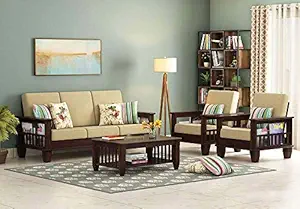
Both sofa sets below are genuine solid wood products currently in stock, shown here with an approximate cost-per-year figure assuming a 12-year usable life.
- Walnut Sofa Set 5 Seater with Magazine Holder – Rs 33,703. Built-in magazine holder, solid wood frame, roughly Rs 2,800 per year of use over a 12-year lifespan.
- Teak Wood Sofa Set 5 Seater, 3+1+1 – Rs 33,704. Honey finish, solid frame construction, similar per-year cost when spread across its expected lifespan.
For more budget-conscious new options, see our Wooden Sofa Sets Under Rs 40,000 guide, and for the broader case for investing in quality furniture, our Why Investing in Quality Furniture Saves Money article.
Where People Actually Buy Second-Hand Furniture in India
OLX and Quikr remain the largest general classifieds platforms for used furniture, with the widest selection but the least seller accountability – anyone can list anything with minimal verification. Facebook Marketplace and local moving-out groups tend to have more context per listing, since sellers are often part of the same residential community or professional network, which makes it easier to ask follow-up questions or even see the furniture in a neighbour’s home first. Dedicated second-hand furniture resellers, who buy, refurbish, and resell used pieces, sit in between – they typically charge more than a direct individual seller but often provide a short refurbishment warranty (30-90 days), which meaningfully reduces the “no warranty” risk discussed above.
The Environmental Angle: Does Second-Hand Furniture Reduce Waste?
Buying second-hand furniture does keep usable items out of landfills and reduces demand for new timber and manufacturing resources in the short term. However, this environmental benefit is strongest for durable, long-lasting materials – a second-hand solid wood piece that gets another decade of use is a genuine sustainability win, whereas a used MDF or particleboard piece that will need replacing again within 2-3 years mostly just delays the same waste rather than avoiding it. From a lifecycle perspective, buying one well-made new solid wood piece that lasts 15+ years can have a smaller long-term environmental footprint than repeatedly buying and discarding cheaper second-hand furniture every few years.
A Practical Example
Consider two households furnishing a living room on a similar budget. One buys a used sofa set for Rs 14,000 that needs reupholstering within 18 months (adding another Rs 6,000-8,000) and is discarded within 3 years. The other buys a new solid wood sofa set for Rs 33,700 that lasts 12-15 years without major repair. Even though the second household spent more upfront, their cost-per-year of comfortable seating ends up lower, and only one sofa set enters the waste stream instead of three or four over the same period.
Negotiating a Second-Hand Price Fairly (For Buyer and Seller)
If you do decide second-hand is right for your situation, a fair price accounts for the piece’s age, visible wear, and how many years of use are realistically left. As a rough guide, a well-maintained solid wood piece typically retains 50-60% of its original value after 2 years, 30-40% after 5 years, and relatively little after 8-10 years regardless of condition, since buyers increasingly discount for unknown internal wear. Furniture with visible upholstery staining, wobble in the frame, or missing original hardware should be priced well below these benchmarks. Bringing this kind of reasoning to a negotiation, rather than just offering a round number, tends to result in a fairer price for both sides.
How to Evaluate a Second-Hand Piece If You Do Buy Used
- Inspect in person before paying – check every joint, drawer slide, and upholstery seam for wear or damage.
- Ask how old the piece is and why it’s being sold – a genuine relocation sale is a better sign than an unexplained quick sale.
- Ask for the original purchase invoice if the seller claims it’s recent – this also tells you whether it was ever a genuine solid-wood piece.
- Factor in cleaning costs upfront for any upholstered or mattress item, rather than treating it as optional.
- Negotiate based on remaining life, not just the seller’s asking price – a piece with 2 years of life left is worth less than one with 8.
Common Mistakes
- Comparing only the sticker price without factoring in transport, cleaning, and likely repair costs.
- Buying a used mattress or heavily upholstered sofa without a hygiene assessment.
- Assuming “barely used” claims without asking for the purchase date or invoice.
- Skipping an in-person inspection for a large purchase based on photos alone.
- Choosing new furniture purely on price without checking if it’s genuinely solid wood – see our Real vs Fake Sheesham Wood guide before buying new, too.
Frequently Asked Questions
Is it worth buying second-hand furniture in India?
It can be, for short-term housing or low-stress items like bookshelves. For daily-use furniture like sofas and beds, hidden repair and hygiene costs often erode the savings once compared over the full useful life.
Is a second-hand mattress safe to buy?
Generally not recommended – mattresses carry hygiene risks that are hard to fully address with cleaning, and a new mattress is a relatively low-cost item where the hygiene risk isn’t worth the discount.
How much cheaper is second-hand furniture really?
Upfront prices are often 40-60% lower, but once transport, cleaning, and repair costs are added and the shorter remaining lifespan is factored in, the true cost-per-year gap narrows significantly for sofas, beds, and dining sets.
What furniture is safest to buy second-hand?
Low-stress storage furniture like bookshelves, cabinets, and side tables generally hold up best as second-hand purchases, since they don’t carry the wear, hygiene, or structural risks of daily-use seating or sleeping furniture.
Does new furniture always come with a warranty?
Most established manufacturers offer at least a 1-year structural warranty on new solid wood furniture, giving buyers recourse that second-hand purchases don’t have.
Should I buy second-hand furniture for a short-term rental?
Yes, this is one of the strongest cases for second-hand – if you’ll likely resell or dispose of the furniture within a year or two anyway, its shorter remaining lifespan matters less.
How much does a used sofa depreciate per year?
A well-maintained solid wood sofa typically retains 50-60% of its original value after 2 years and 30-40% after 5 years, with value dropping further as visible wear and unknown internal wear increase.
Is buying second-hand furniture better for the environment?
It can be, but mainly when the piece is genuinely durable and gets many more years of use. A cheap second-hand piece that needs replacing again within a few years mostly delays waste rather than avoiding it.
Second Hand vs New Furniture: Quick Recap
The second hand vs new furniture decision comes down to how long you will stay in your home and how much daily wear the piece will see – short-term and low-stress pieces favour second-hand, while daily-use sofas and beds usually favour new.
Conclusion
There is no universally right answer here – the correct choice depends on how long you plan to stay in your current home, how much daily wear the piece will see, and whether hygiene and warranty coverage matter for that specific item. Run your own numbers through the total cost of ownership table above before deciding either way.
Second-hand furniture genuinely makes sense for short-term housing and low-stress storage pieces, but for sofas, beds, and daily-use furniture in a long-term home, the true cost-per-year math – once you include repairs, cleaning, and the missing warranty – usually favours new solid wood furniture. Compare your specific situation against the total cost of ownership table above before deciding. For real, budget-friendly new options, see our Wooden Sofa Sets Under Rs 40,000 guide and our Why Investing in Quality Furniture Saves Money article.
Reference: Wikipedia – Total Cost of Ownership.